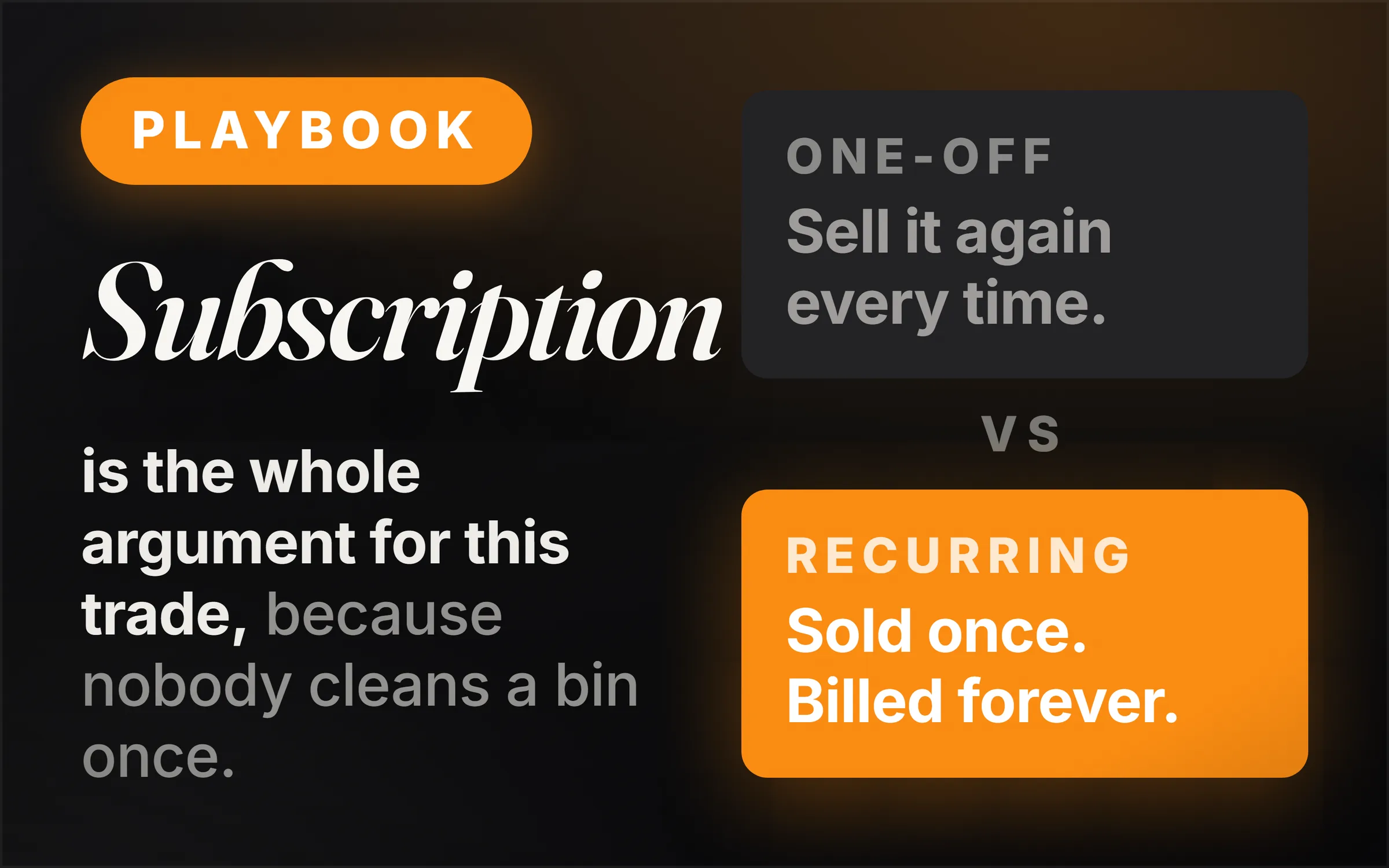
You start a web design business by picking one industry, building a repeatable product rather than bespoke sites, and selling ongoing hosting, maintenance and changes rather than one-off builds. That structure matters more here than in any other trade we have looked at, because the default structure of this business produces an unusually poor result.
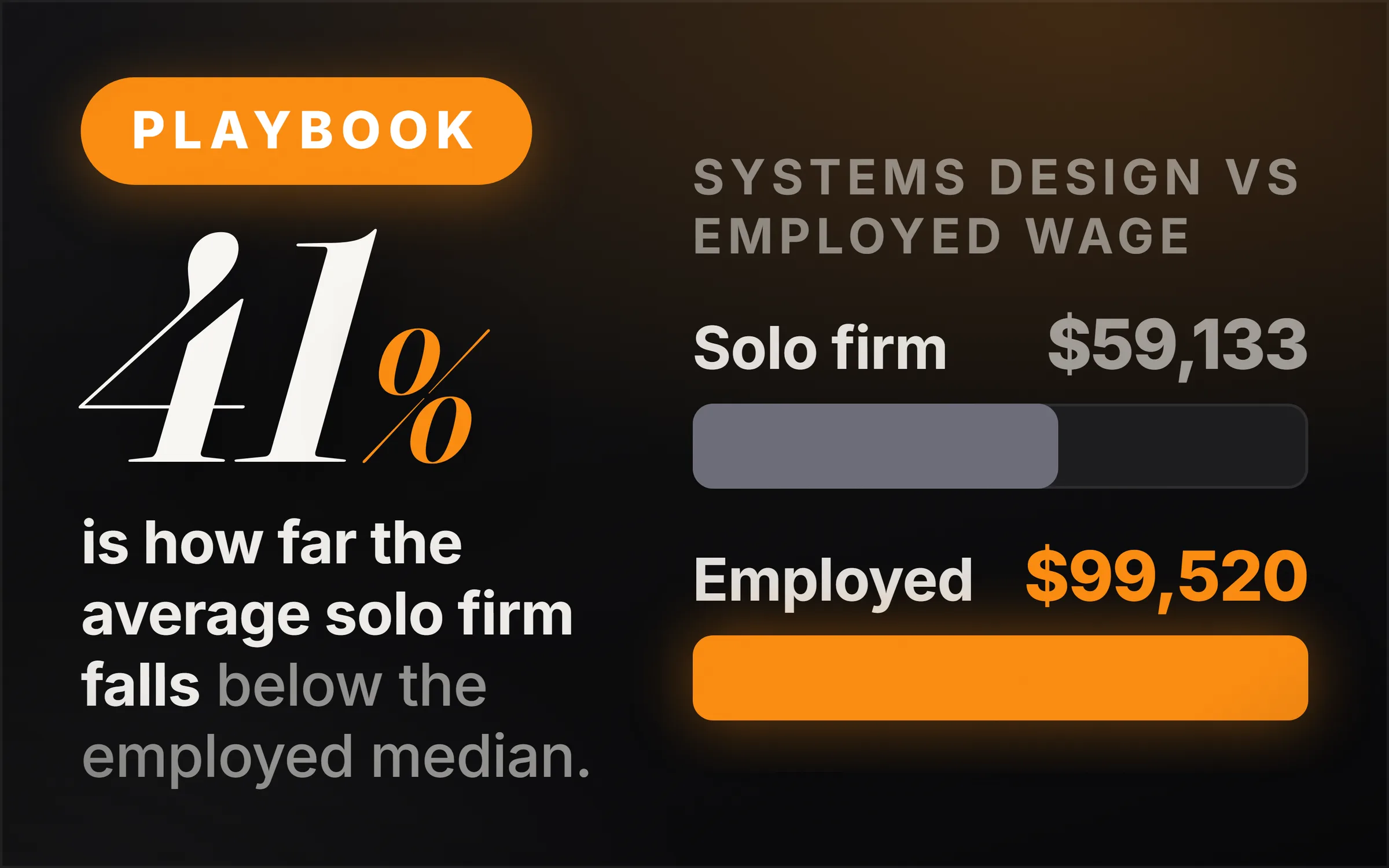
In 2022 the average solo firm in computer systems design took in $59,133, across 342,033 establishments with no employees. The median wage for an employed web developer or digital designer was $99,520 as of May 2025. The average person who went independent in this field is grossing 41 percent less than the median person who did not, before costs and before self-employment tax.
That is the largest inversion in our data, and it is the exact opposite of what this business is usually sold on.
How much does a web design business make?
The average solo operator grossed $59,133 in 2022. That is Census Bureau Nonemployer Statistics for NAICS 5415, computer systems design and related services, covering 342,033 establishments with no paid employees and $20.2 billion in receipts.
The category includes web design alongside custom programming, IT consulting and systems integration, because six-digit detail is not published for solo firms nationally. It is the closest published population rather than an exact match, and if anything it flatters web design, since it includes higher-billing consulting work.
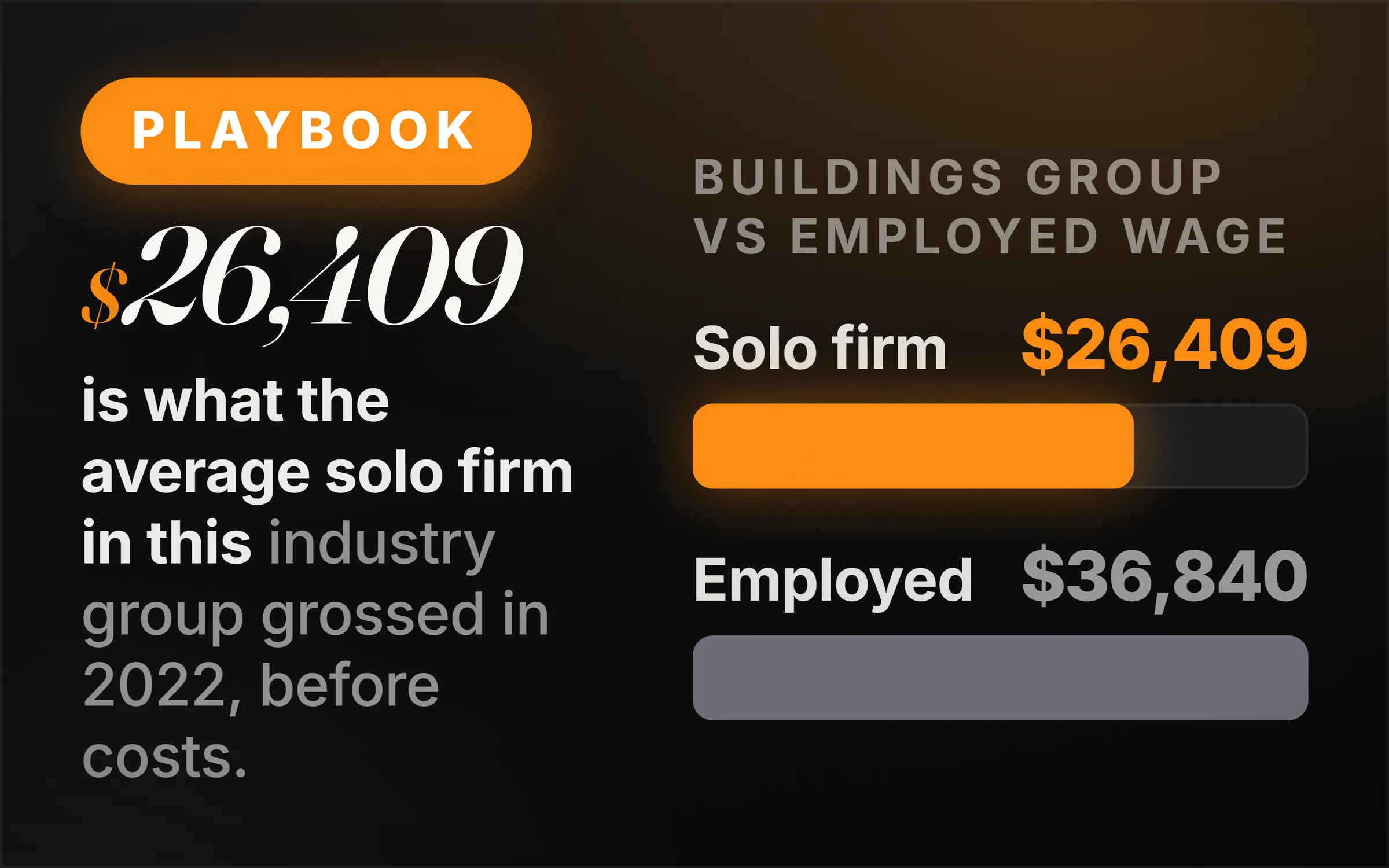
The comparison that matters is with the wage. BLS put the median for web developers and digital designers at $99,520 a year, or $47.85 an hour, as of May 2025, with a bachelor's degree as typical entry-level education. So the average independent firm in this space takes in 41 percent less revenue than the median employee earns in salary, and out of that revenue it must pay its own costs, its own self-employment tax at 15.3 percent, and cover its own unpaid time.
Nobody selling a course on freelance web design publishes that comparison. It is the single most important number in the decision.
Why does the average trail the employed wage so badly?
Because of how the product is sold, not how well it is built. A website is a one-off purchase, made rarely, by a buyer who does not know how to evaluate it, in a market where the visible price floor has collapsed.
Three forces compound. The sale does not repeat: a small business commissions a site every three to five years, so every dollar of revenue requires a fresh sale to a fresh buyer, and the cost of winning work never amortises. The product has been commoditised: website builders and now AI-assisted generation have made something that looks acceptable nearly free, which anchors what a buyer expects to pay regardless of what they are actually getting. The buyer cannot evaluate quality: performance, accessibility, maintainability and search fundamentals are invisible at handover, so the cheapest quote wins comparisons it should lose.
Add the tail that every Census average carries, which is a large population of part-time and abandoned registrations, and $59,133 is what falls out.
None of this says the work is unprofitable. It says the default way of doing it is, and that the operators clearing six figures are almost never doing more bespoke one-off builds than everyone else. They restructured what they sell.
Is the web design market shrinking?
No. Solo firms in this industry rose 0.9 percent between 2019 and 2022, from 339,113 to 342,033, and average revenue per firm rose 18.4 percent, from $49,928 to $59,133.
That is a market growing modestly in operators and materially in revenue per operator, over a period spanning the arrival of tools that were supposed to eliminate the work. It did not happen. Revenue per solo firm rose by nearly a fifth.
The honest reading is that the tools moved what the job is rather than removing it. Producing pages got cheaper; deciding what the pages should say, making them load and rank, integrating them with the systems a business already runs, and keeping them working did not. The operators being displaced are the ones selling page production. The ones selling outcomes are taking more than they did in 2019.
So the risk in this business is not the market disappearing. It is entering it selling the exact thing that got cheap.
What should you sell instead of websites?
An ongoing relationship with a monthly price attached: hosting, maintenance, security updates, backups, and an allowance of changes each month. The build becomes the entry point rather than the product.
The arithmetic is what makes this decisive. A one-off build at $3,000 is a project you must replace next month with another sale. The same build at $2,000 plus $200 a month is worth $4,400 in the first year and $2,400 every year after, with no further selling. Ten of those is a business with predictable income; ten one-off builds is a business that starts from zero every quarter.
It also fixes the quality problem. Clients on a retainer are clients you keep, which means shortcuts you take come back to you rather than to the next developer, and the incentives finally point the same way as the craft. And it changes what you are competing against: a template site with no one maintaining it is not a substitute for someone who answers when the contact form breaks.
The transition point is the proposal. Selling a retainer requires it to be part of the offer from the first conversation rather than an upsell afterwards, which is a document problem as much as a sales one, and we set that out in how to write a proposal that closes.
Do you need to be able to code?
Not to start, and this is genuinely different from a decade ago. A large share of the small business market is served on established platforms where the work is configuration, content, integration and judgement rather than writing code from nothing.
What you cannot skip is understanding what you are producing. A site that loads slowly, breaks on a phone, cannot be edited by the client, or is invisible to search is a failure regardless of how it was built, and the difference between an operator who charges $500 and one who charges $5,000 is almost entirely the ability to tell those outcomes apart in advance.
There is a second thing that is not code and matters more than any tool, which is diagnosing what the business actually needs. Most small businesses asking for a website are asking for enquiries, and those are not the same request. An operator who can say which pages, which content and which follow-up will produce enquiries is selling something a template cannot, which is the only durable position in this trade.
If the goal is to build software rather than sites, that is a different and better-structured business, and we wrote about the route in make money vibe coding.
How do you get clients as a new web designer?
Pick one industry and become the obvious choice inside it. Generalist web design is the most competitive corner of this market and the one where the price anchor is lowest. The same work for a defined niche is a different business with different economics.
The mechanism is compounding. The second site for a dental practice takes a fraction of the time of the first, because the structure, the content pattern, the integrations and the objections are already solved. By the fifth you are delivering in days what took weeks, at the same price, with references the buyer recognises. Nothing about your skill changed; the repetition did the work.
It also solves the credibility problem that makes the first year hard. "I build websites" invites comparison against everyone. "I build booking sites for dental practices, here are four" answers the buyer's real question, which is whether you have solved their specific problem before.
Practically: choose an industry you can reach, build one excellent example, and approach twenty businesses in it with something specific about their current situation. That sequence is in how to get your first client without asking for one, and if you are reaching them by email, read why your cold emails go to spam first, because a filtered message and a rejection look identical.
The honest hard part
The hard part is that this business is unusually easy to enter and unusually hard to earn well in, and the two facts are connected. Low barriers brought in 342,033 solo operators, and the resulting price competition is exactly why the average sits 41 percent below the employed wage.
The second hard part is scope. Websites are the most scope-unstable product in service work, because the client's idea of the thing changes as they see it, and every change looks small from their side. A build quoted as three weeks becomes three months through a sequence of individually reasonable requests, and the effective hourly rate collapses without any single moment where it went wrong. That is not a client problem, it is a specification problem, and the mechanics of preventing it are in how to handle scope creep.
The third is that the comparison at the top of this article deserves to be taken seriously rather than argued away. If you can get the employed job at anything near the median, and what you want is money, the job pays better than the average version of this business by a wide margin. The case for going independent has to rest on the version that beats the average: one industry, a repeatable product, and revenue that recurs. Built that way it is a genuinely good business. Built the default way, the data says it is not.
For how this trade compares against the others we pulled, see boring businesses: which ones actually make money.