You start a pressure washing business by working out where your wash water is allowed to go, then buying equipment that matches that answer, then selling repeat commercial contracts rather than one-off driveways. Almost every guide reverses this order, and the operators who follow that reversed order end up locked out of the only customers worth having.
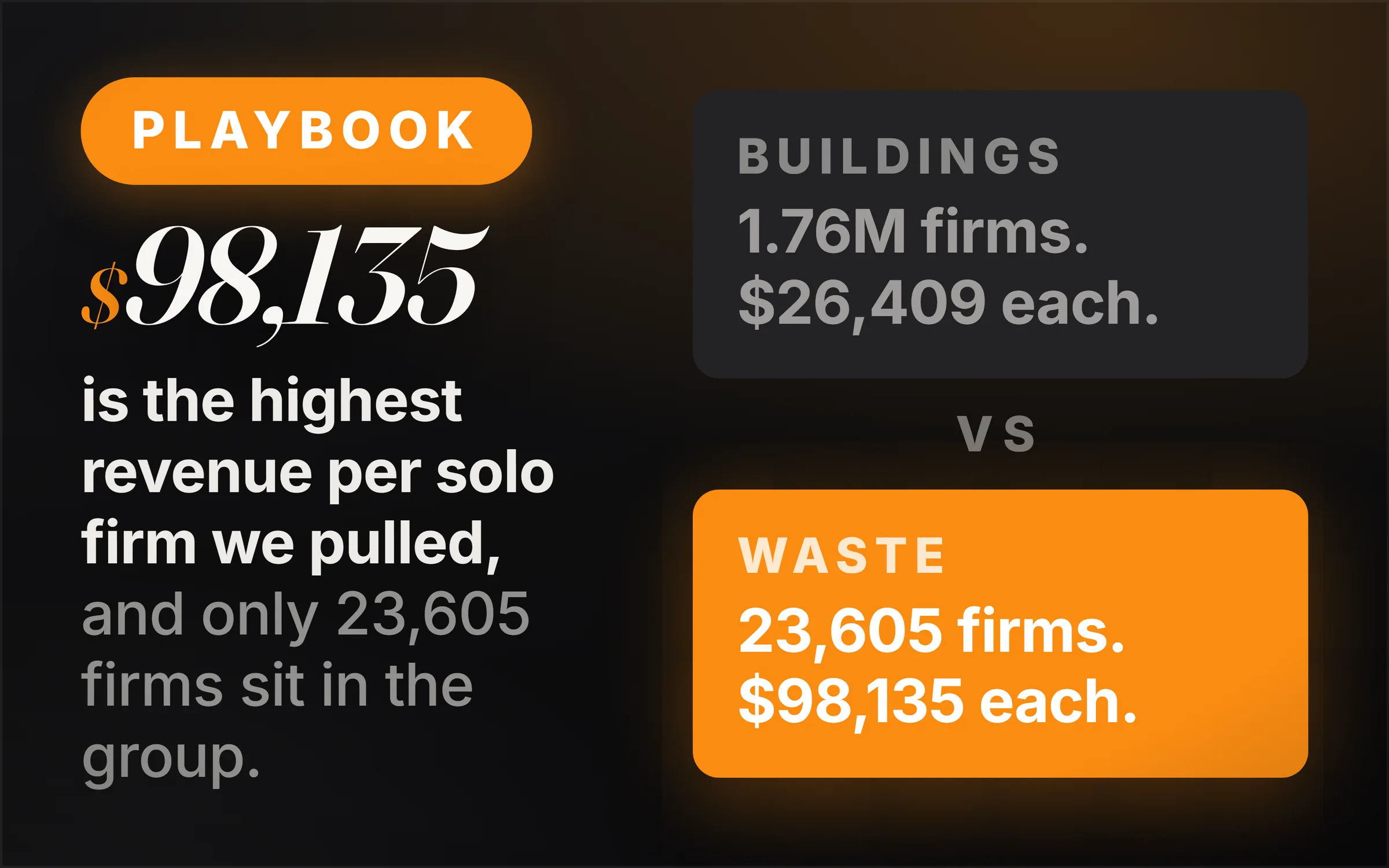
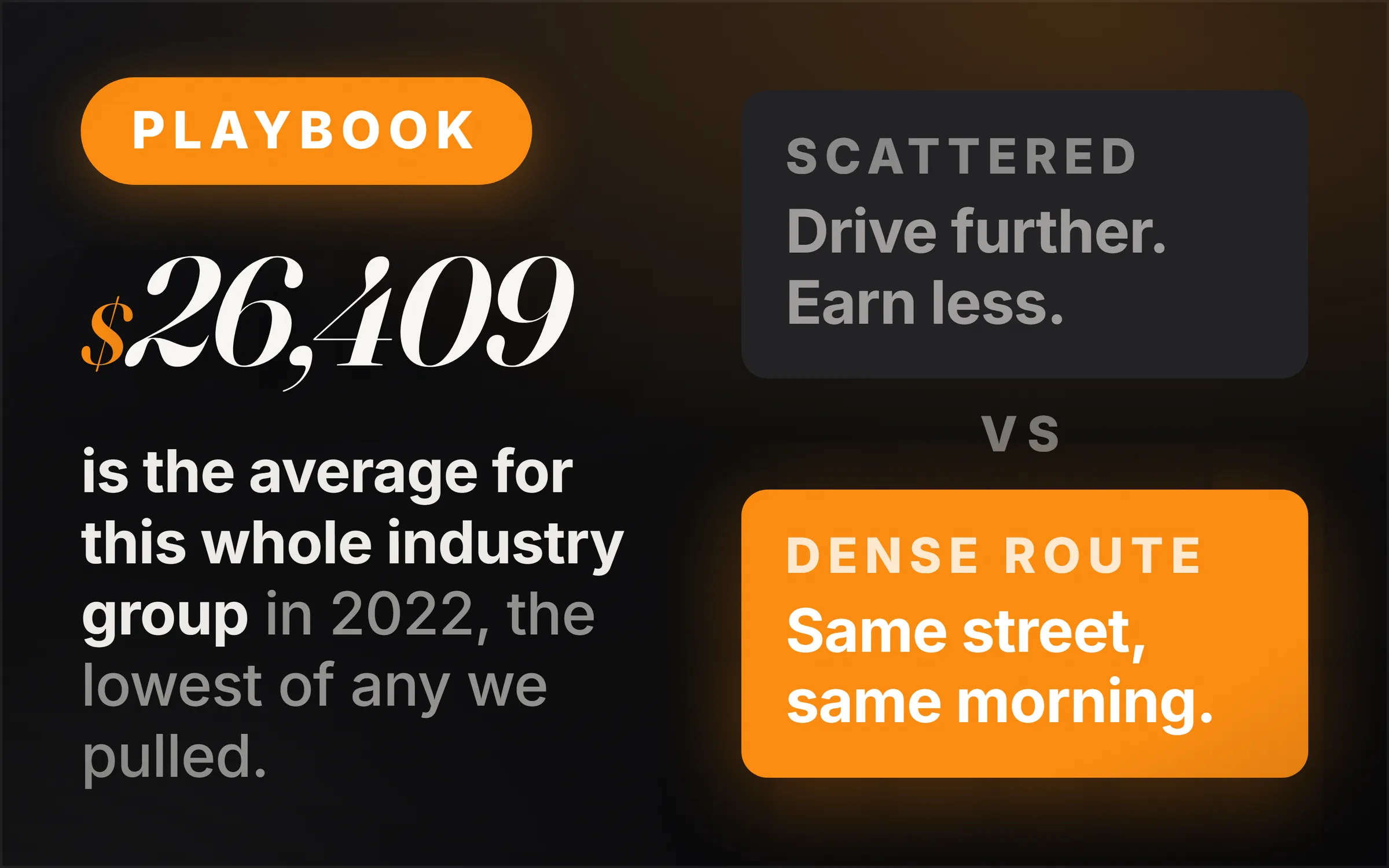
The industry group this trade sits in, the Census category for services to buildings and dwellings, averaged $26,409 per solo firm in 2022, across 1,757,318 establishments with no employees. It is the lowest-earning and most crowded group in our entire dataset, for the reason that runs through all of it: anyone can buy a machine.
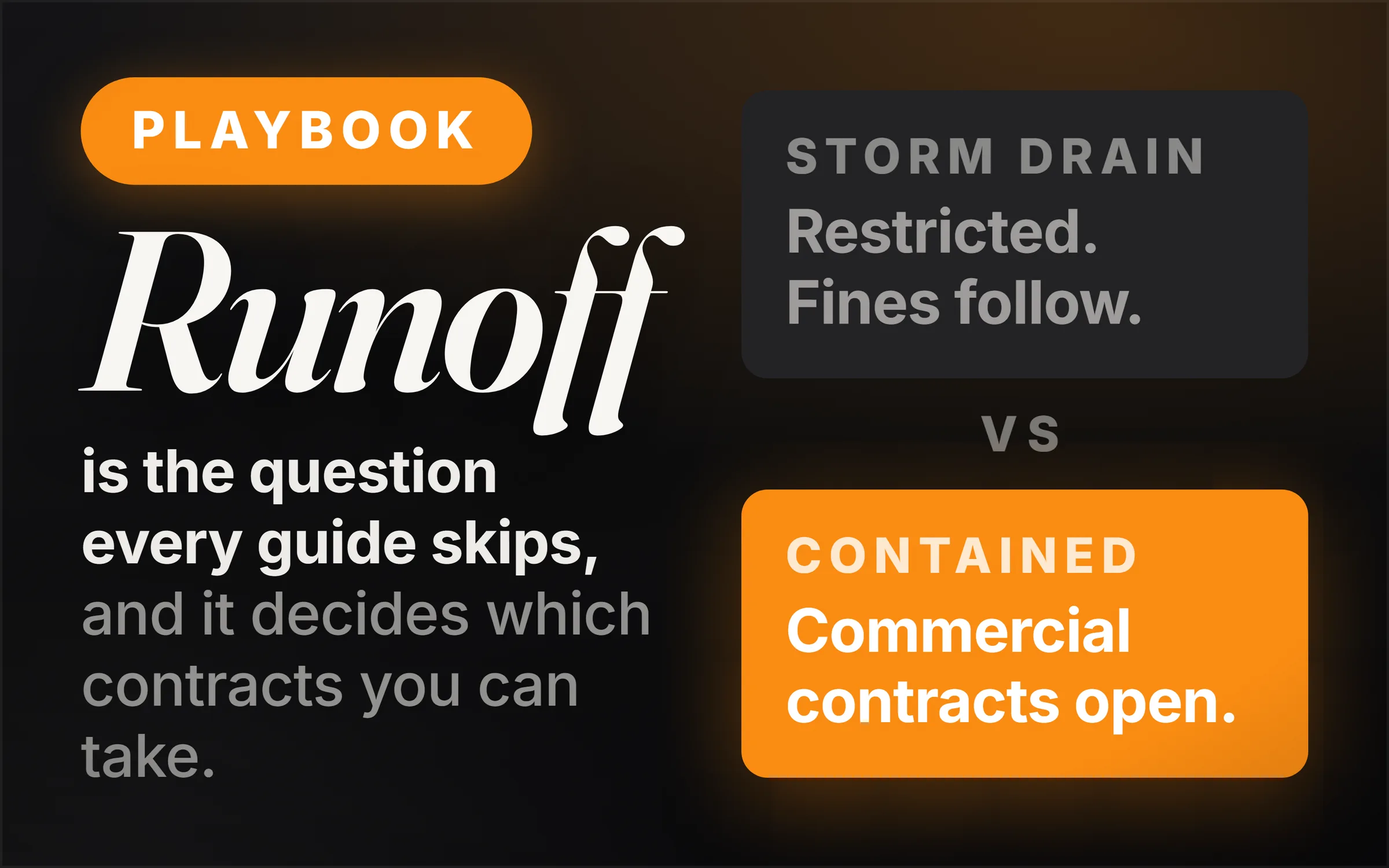
The runoff question is the one real barrier in this trade, and it is the reason a small number of operators serve commercial clients at good rates while a very large number compete for residential driveways at low ones.
Where is the wash water allowed to go?
This is the question to answer before buying anything, and it has a real answer that differs by locality. Wash water carrying detergent, oil, grease and surface residue is not rainwater, and storm drains generally discharge to natural water rather than to treatment.
That makes wash water entering a storm drain a non-stormwater discharge, which is the specific category municipal stormwater programmes exist to control. Many jurisdictions restrict or prohibit it for commercial operations and require that the water be contained, collected and disposed of appropriately, often to sanitary sewer with permission rather than to the street.
The requirements vary substantially by state and municipality, and we are not going to summarise a rule that differs everywhere. What we will say is that this determines your equipment list, so it has to be researched first: contact your own city's stormwater or environmental services department and establish what is required for commercial washing before you buy a machine, a recovery system, or anything else.
There is a commercial reason as well as a compliance one, and it is the more interesting of the two. Businesses that have their own environmental obligations, which is most sites of any size, will ask how you handle runoff. Having a real answer qualifies you for work that the operator with a machine and a hose cannot take, and that is precisely the work that pays.
How much does a pressure washing business make?
There is no published figure for pressure washing on its own. It sits inside Census NAICS 5617, services to buildings and dwellings, which averaged $26,409 per solo firm in 2022 across 1,757,318 establishments and $46.4 billion in receipts. The Census does not publish six-digit detail for solo firms nationally, so that group, which also contains janitorial, landscaping and pest control, is the environment rather than a measurement of this trade.
What the group tells you is the competitive picture, and it is the least favourable in our data. It has more solo operators than any other category we pulled and the lowest revenue per operator by a wide margin, which is what an extremely low barrier to entry produces.
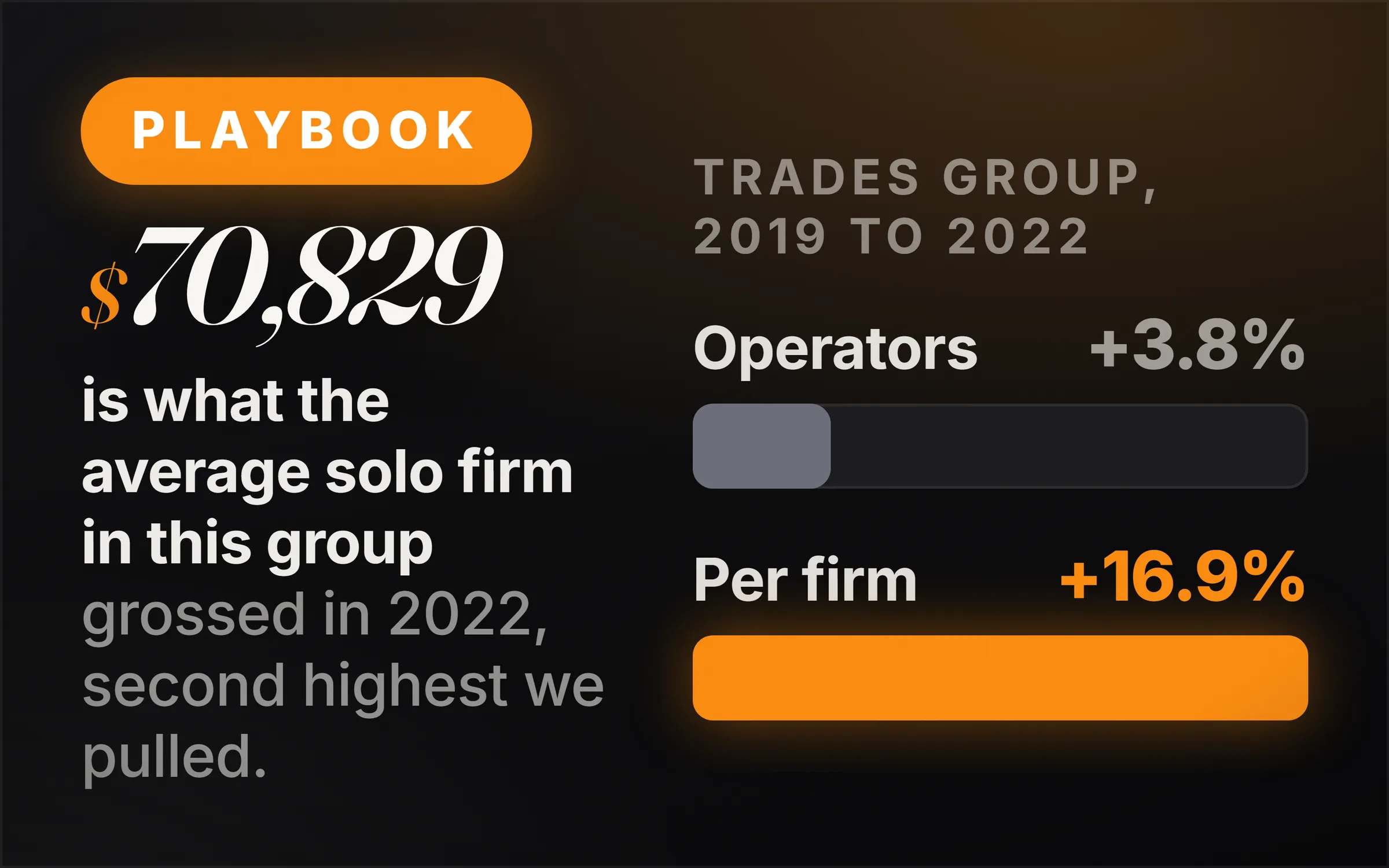
The group is growing: firms up 7.6 percent and revenue per firm up 18.9 percent between 2019 and 2022. Demand is not the problem. The problem is that the same accessibility that let you start also let everybody else, and residential driveway work is where all of them are competing.
The way out of the average is the same as in cleaning: recurring commercial contracts rather than one-off residential jobs, which we set out in full in is a cleaning business profitable using the same industry group.
What should you charge?
By surface area and condition, quoted after seeing the surface, never by the hour and never over the phone from a description.
The machine works at a roughly fixed rate, so the honest unit is square footage. What varies is condition and surface type: heavy organic growth, oil staining, or a delicate material that requires lower pressure and chemical treatment all change the time and the risk substantially for the same area.
Hourly pricing fails here for the usual reason plus one specific to this trade. The usual reason is that improvement reduces your income. The specific one is that a customer watching an hourly clock while a machine does visible work forms opinions about pace that have nothing to do with the result, and pressure washing is unusually watchable.
The item to price separately is anything requiring chemical treatment rather than pressure alone, which includes most organic growth on most surfaces. Operators who quote everything as pressure work and then discover a job needs soft washing and dwell time have already given away the margin.
If you have no basis for a first number, derive it from your own costs and capacity rather than local competitors, using the method in how to price a service with no track record.
What can go wrong on a job?
Surface damage, and it happens in seconds. This is the defining risk of the trade and it is why insurance and technique matter more than equipment power.
High pressure on the wrong material destroys it: timber, soft brick, mortar, painted surfaces, older render and certain roofing all fail under pressure appropriate for concrete. The damage is immediate, visible and unarguable, and it frequently costs more to remedy than the entire job was worth.
Water intrusion is the second one, and it is more insidious because it is not visible on the day. Driving water into a wall cavity, under cladding, or through a compromised seal produces a problem that appears weeks later, and the customer will connect it to you correctly.
The professional response is not more power, it is less: identifying the material, selecting the appropriate pressure and nozzle, and using chemical treatment with dwell time where pressure alone would damage the surface. That knowledge is the actual skill in this trade, and it is what separates the operators who can quote confidently on a mixed property from those who can only do concrete.
Insurance is not optional against that risk profile. Next Insurance publishes general liability "Starting at $19/month" with a footnote reading "for some low-risk businesses," which is a floor for the safest possible customer and plainly not a quote for high-pressure work on other people's buildings.
Who are the best customers?
Property managers, retail sites, restaurants, petrol stations and housing associations, because they need this on a schedule and they need the runoff handled properly.
The pattern is identical to every trade in this series and it is worth stating once more. A homeowner has their driveway cleaned every few years, compares quotes, and buys once. A commercial site needs its forecourt, its bin area, its walkways or its drive-through cleaned on a recurring basis because appearance and hygiene are part of their operation, and they will buy the same service repeatedly from whoever is reliable.
Restaurants and food sites are the strongest version, because grease and organic residue accumulate continuously and are not optional to remove. Those also happen to be the customers most likely to ask how you handle wash water, which brings us back to the first section: the compliance answer is the qualification.
The route in is direct approach within a tight radius, which is the same sequence as every local trade and is set out in how to get your first client without asking for one.
The honest hard part
The hard part is that the entry barrier is a machine you can buy in an afternoon, and that fact is doing all the damage in the category average.
There is nothing between a new entrant and their first residential driveway job. No licence, no credential, no meaningful capital. So the residential end of this market is permanently crowded with people competing on price, and an operator who stays there is competing with someone who will always be cheaper because they have not costed their own time.
The second hard part is seasonality and weather. Exterior work concentrates in the warmer, drier months, and a wet week is a week with no revenue and the same fixed costs. That is manageable if it is planned for, with interior or commercial work carrying the shoulder seasons, and it is a serious cash flow problem if it is not.
The third is that the runoff question is genuinely inconvenient, and that is exactly why it is worth solving. Most people entering this trade will not research it, will not buy containment, and will therefore never be eligible for the contracts that pay properly. The compliance work that looks like an obstacle is the closest thing this business has to a moat.
For how this trade's category compares with the others we pulled, see boring businesses: which ones actually make money.