You start a handyman business by defining a narrow list of jobs you will do, confirming where your state's contractor licensing threshold sits, pricing by the job rather than the hour, and building a base of repeat customers rather than chasing one-off calls. The licensing question comes first because it determines what work you may legally accept.
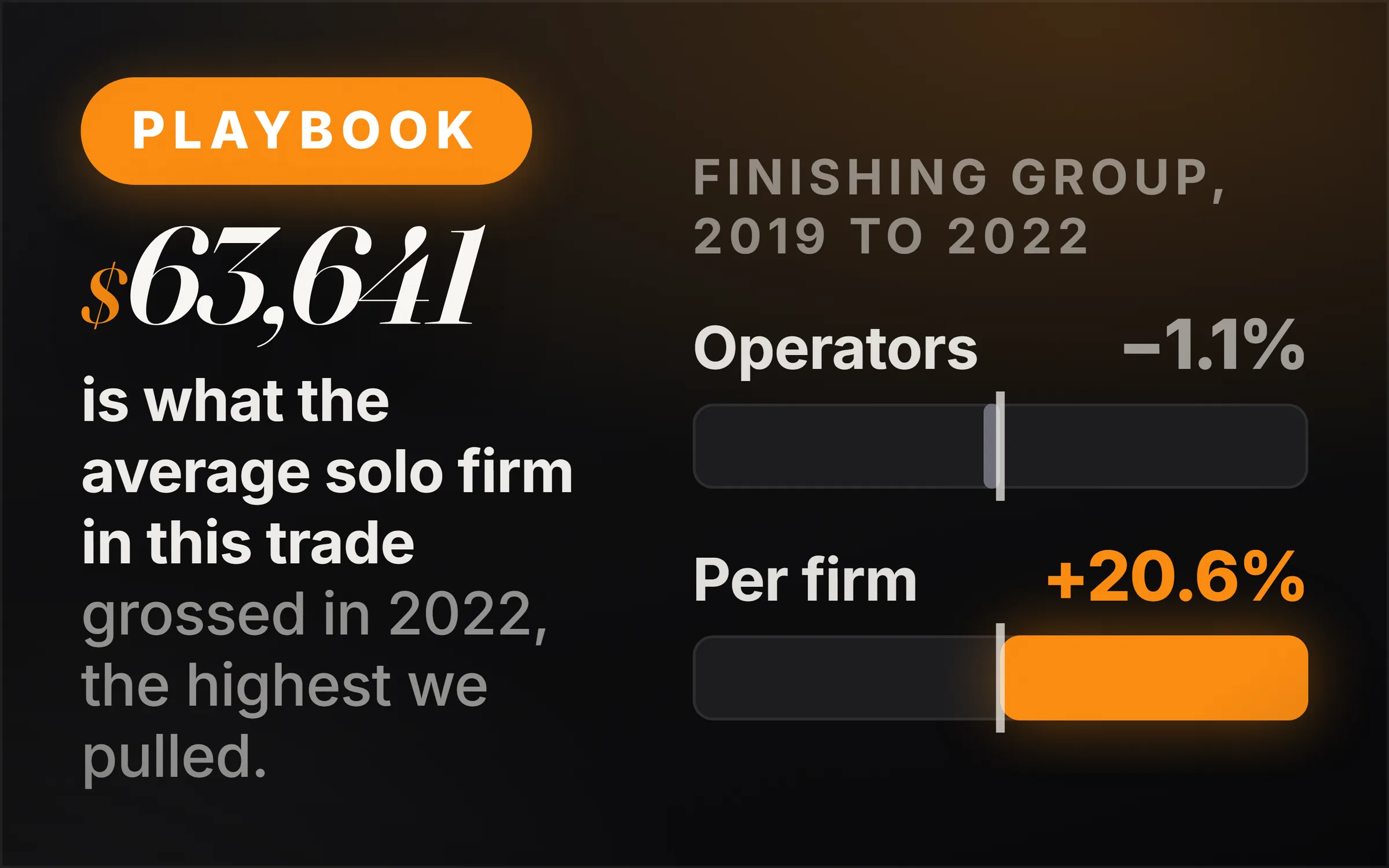
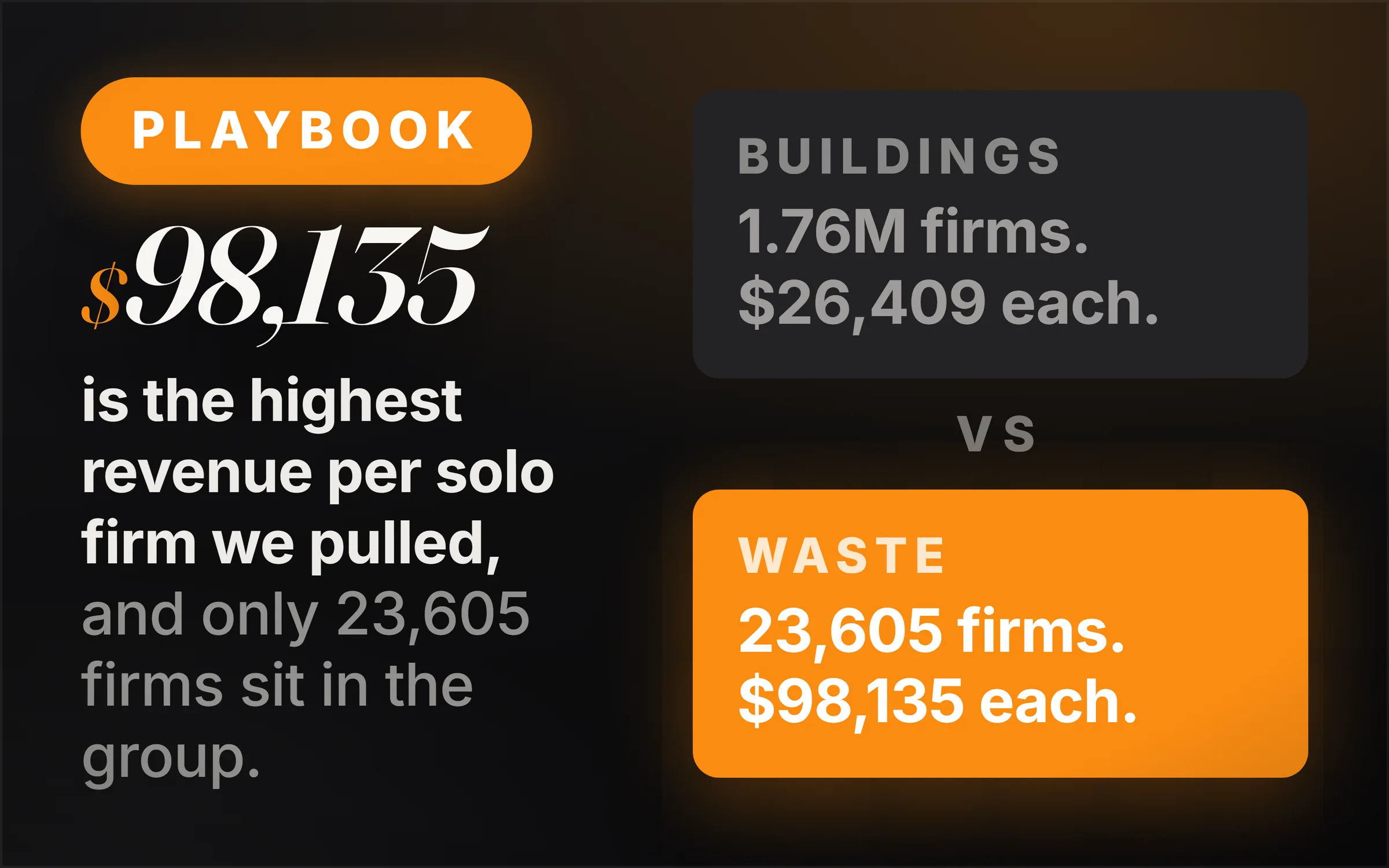
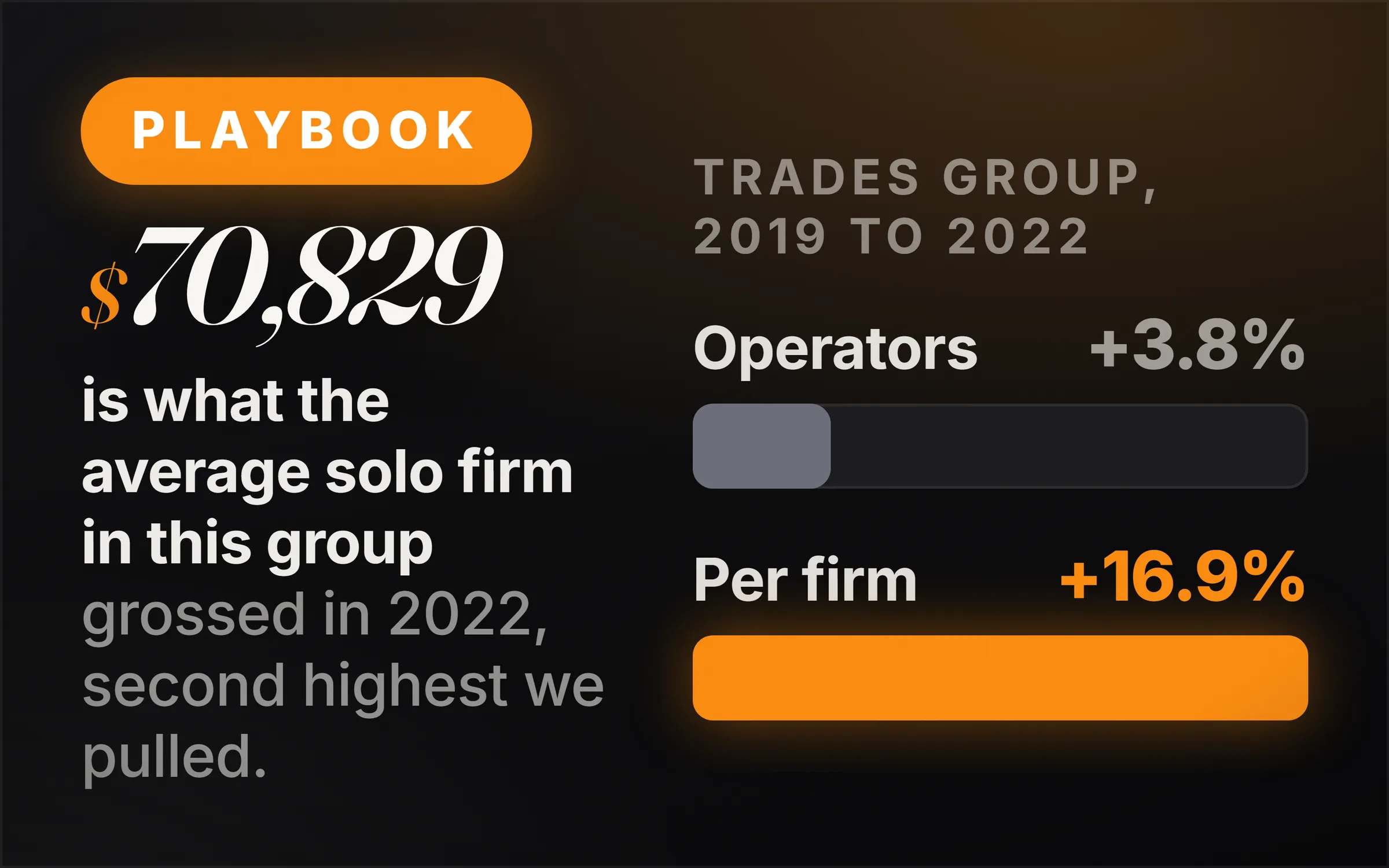
In 2022 the average solo firm in other specialty trade contracting, the Census category this work sits in, took in $70,829, across 589,854 establishments with no employees. That is the second-highest figure in anything we have pulled, behind only waste management. Between 2019 and 2022 the number of operators rose modestly at 3.8 percent while average revenue per operator rose 16.9 percent, from $60,597.
More operators and materially more money each is a healthy market. It is the opposite of what we found in vehicle rental, and it is the pattern you want before entering a trade.
How much does a handyman business make?
The average solo operator grossed $70,829 in 2022. That is Census Bureau Nonemployer Statistics for NAICS 2389, other specialty trade contractors, covering 589,854 establishments with no paid employees and $41.8 billion in receipts.
The category is broader than handyman work. It includes a range of specialty trade contracting, some of it more specialised and higher-value than general home repair, so treat the figure as the population this trade sits inside rather than a handyman-specific average.
What it establishes clearly is the comparison with the entry-level trades. Services to buildings and dwellings, which is cleaning and landscaping, averaged $26,409 across 1,757,318 solo firms. Handyman work sits in a category with a third as many operators and 2.7 times the revenue each. The reason is the same one that runs through this whole dataset: the work requires competence a customer cannot fake their way into, so fewer people enter.
The trend is also favourable. Revenue per operator rose 16.9 percent between 2019 and 2022 while operator numbers rose only 3.8 percent, which is demand growing faster than supply.
Do you need a licence to be a handyman?
Usually up to a dollar threshold, and above it you generally need a contractor licence. That threshold is set by each state and the variation between them is large enough that no general figure is useful.
This is the single most important administrative fact in the trade, and it is where new operators get into genuine trouble rather than merely inconvenient trouble. Work performed above the threshold without the required licence can be unenforceable as a contract, uninsurable, and subject to penalty, and none of that becomes visible until something goes wrong.
There are also trades that are almost always carved out regardless of value. Electrical, plumbing and gas work typically require their own specific licences in their own right, and the fact that a job is small does not exempt it. A handyman replacing a light fitting and a handyman rewiring a circuit are in completely different regulatory positions.
The practical approach is to spend an afternoon before your first paid job establishing three things with the issuing authority in your own state: the dollar threshold at which contractor licensing applies, which trades are excluded from any handyman exemption, and what local registration your city requires. Then define your job list to sit safely inside those limits. That list is your business, and the discipline to stay inside it is what keeps it viable.
What jobs should you take?
A defined list you can do well and quickly, and nothing else. The temptation in this trade is to say yes to everything, and it is the most reliable way to lose money and take on risk you are not covered for.
The economics favour narrowness for the same reason they do in every service business: repetition makes you fast, and speed on a job price is margin. An operator who fits the same kind of fixture fifty times has a completely different cost base from one who encounters each job fresh, and the customer pays the same either way.
The risk case is stronger still. Work outside your competence takes longer than quoted, produces results you are not proud of, and occasionally causes damage you are liable for. Work outside your licence exposes you regardless of how well it was done. A written list of what you do, given to customers up front, is not a limitation, it is the thing that makes you look like a professional rather than a generalist with a van.
Saying no is also a sales tool. "That needs a licensed electrician, here is one I trust" builds more confidence than attempting it, and the electrician tends to return the favour. The discipline of holding that line under pressure from a customer is covered in how to handle scope creep.
What should you charge?
By the job, from an estimate of time plus materials plus travel, with a stated minimum call-out. Not by the hour.
Hourly pricing has a specific perverse effect in the trades: the better you get, the less you earn for the same work, and getting faster is the main thing that happens as you accumulate experience. Job pricing lets your improvement accrue to you. It also removes the conversation about how long something should have taken, which is a conversation nobody wins.
The minimum call-out matters more here than in most trades because handyman work is full of small jobs whose travel and setup exceed the work itself. A fifteen-minute task twenty minutes away is a loss at any hourly rate and a reasonable job at a sensible minimum. Publishing that minimum up front filters out the calls that were never going to be profitable, before you have driven anywhere.
Materials should be charged separately and transparently, with a markup that reflects the fact that sourcing them is work. Absorbing material costs into a job price makes the quote look better and quietly deletes the margin. If you have no basis for a first number, derive one from your own costs and capacity using the method in how to price a service with no track record.
Who are the best handyman customers?
Property managers, letting agents and landlords, because they have a continuous supply of small jobs and value reliability over price.
The economics of a repeat buyer dominate this trade. A homeowner calls when something breaks, which is rarely, and compares quotes when they do. A letting agent has a portfolio of properties generating faults continuously, needs them fixed between tenancies on a schedule, and will happily use one reliable operator for all of it rather than sourcing each job. One such relationship can fill a meaningful share of a calendar without a single further sale.
Older homeowners are the other strong segment, and for a different reason: they tend to have an ongoing list of small tasks rather than a single fault, and they value trustworthiness and turning up when promised far above the last ten percent of price. Both of those are things you can actually deliver.
What all the good customers have in common is that they are buying reliability rather than repair. The technical work in this trade is not hard to find; someone who answers the phone, arrives when they said, and does what they promised is genuinely scarce. That is the product. The route to the first of them is in how to get your first client without asking for one.
The honest hard part
The hard part is that this trade punishes vagueness in three directions at once, and new operators are usually vague in all three.
Vague about scope, and every job expands. Vague about licensing, and you take work you should not have. Vague about price, and you discover the margin was gone before you started. The operators earning near that $70,829 average have all made the same three decisions explicitly, written them down, and stopped negotiating them.
The second hard part is that demand is genuinely unlimited and your capacity is not, which sounds like a good problem and is not. A handyman who is any good is never short of work, which means the constraint immediately becomes hours, and the only ways past it are raising prices or hiring. Most operators do neither, and stay busy and modestly paid for years.
The third is the physical and administrative tail that nobody counts: sourcing materials, driving, quoting jobs you do not win, and the small unpaid tasks that get absorbed to keep a customer happy. That is the real overhead of this trade, and it is why the difference between a good and a bad week is usually organisation rather than effort.
For how this trade compares against the others in the published data, see boring businesses: which ones actually make money.
For the one trade in this data moving against the operator, see how to start a car rental business.