You write cold emails that get replies with Claude by making it research the prospect before it writes a single word, then opening the email on one specific, verifiable fact about that business. You do not ask Claude to "write me a cold email." That produces polished spam. You ask it to be a researcher: read the prospect's own website and tell you exactly where the business is quietly leaking money. Once you have that one true observation, the email almost writes itself, and it works because it is unmistakably about them and not about you.
I am writing this from inside the bet. We built IdeasRepay as a cold start with no audience, so I have no interest in selling you a spray-and-pray fantasy. What follows is the honest system: how to find the right person, the exact prompt that turns Claude into a business auditor, the two emails side by side so you can see the difference, what it really costs, and the law you cannot ignore. Everything here is something you can run this weekend with a free Claude account.
In the video I run the whole thing on screen: the lead source, the auditor prompt, the real output, and the finished email. This written guide stands on its own and goes deeper on the prompt, the costs, and the law. Read it, watch it, or both.
Why do most AI cold emails get ignored?
Because most people ask AI to do the wrong job. They open Claude or ChatGPT, type "write me a cold email to a real estate agent," and send whatever comes back. The result is grammatically perfect and completely interchangeable. It is about the sender, it references nothing true about the recipient, and it reads exactly like the forty other "Hi, I hope this finds you well" emails already sitting in that inbox. The prospect deletes it in a second, and the fact that an AI wrote it faster only means you produced deletable spam faster.
Here is the uncomfortable part. Now that anyone can generate a polished email in five seconds, a polished email is worth almost nothing. The scarce thing is no longer the writing. It is knowing something true and specific about the person you are emailing. That is the entire game, and it is the one thing the volume crowd skips.
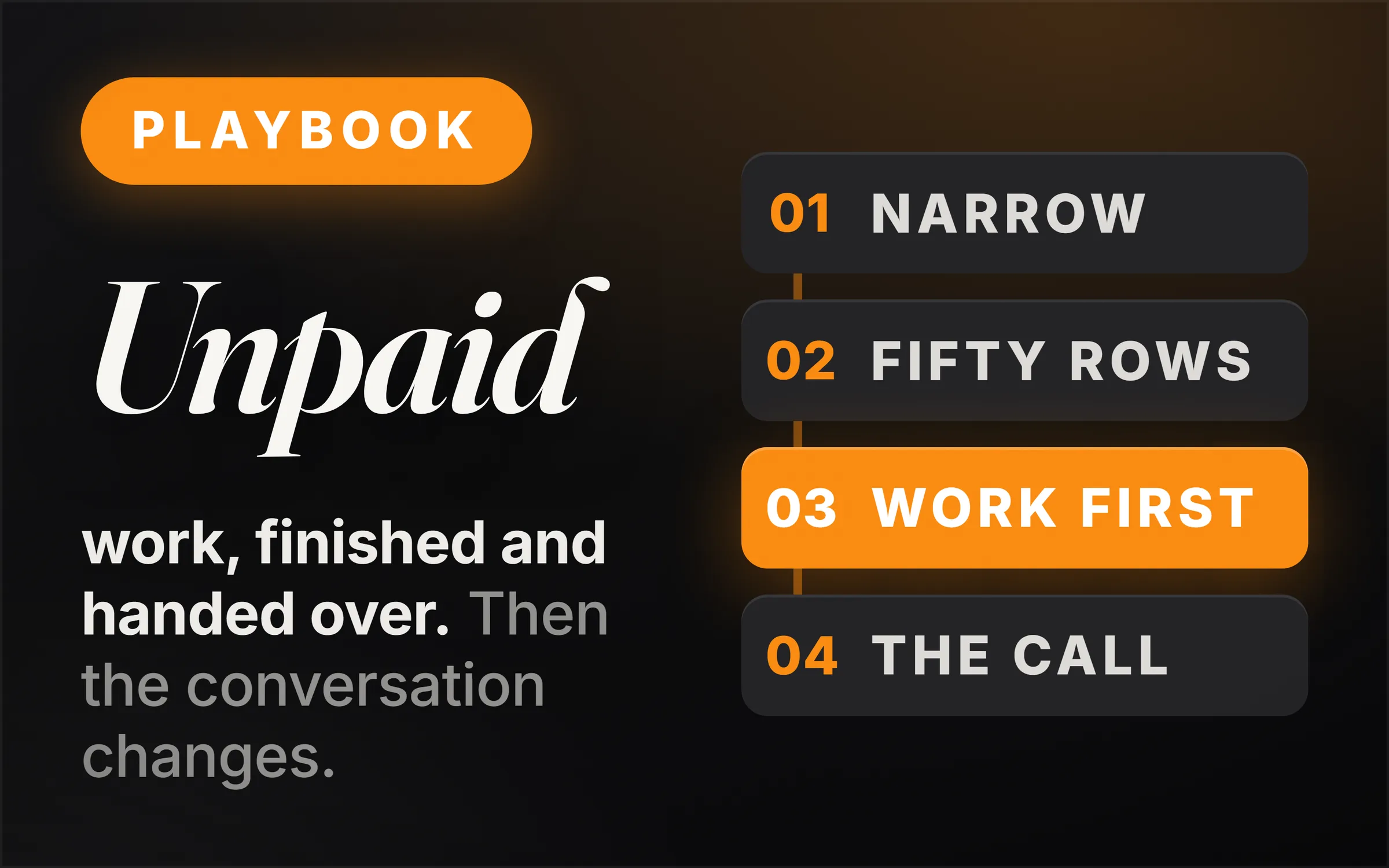
The one shift: research first, write second
Stop treating Claude as a writer and start treating it as a researcher. The order matters more than anything else in this article.
A generic email says, in effect, "I do a thing, want to buy it?" A researched email says, "I noticed this specific problem on your site, here is why it costs you money, and it is the fastest thing to fix." The second one does not feel like a solicitation. It feels like a consultant who already studied the business before reaching out. You cannot fake that with a clever template. You can only get it by doing real research on each prospect, and that is exactly the part Claude makes nearly free.
So the system has three moving parts, and the rest of this guide is just building each one:
- The person. The actual decision-maker, not an
info@inbox. - The research. Claude, running one prompt that reads the prospect's website and returns their most likely bottleneck plus a single surgical opener.
- The email. A short message built from that research, opening on the flaw, asking for something tiny.
How to write a cold email with Claude, step by step
Step 1: Find the right person, not the info@ inbox
You cannot personalize an email to a company. You personalize it to a human who can say yes. For a beginner with zero budget, the cleanest free stack in 2026 is Google Maps plus Apollo.
Start on Google Maps. It is a live directory of millions of active local businesses, and every listing links to a website you can immediately audit for flaws. Search a niche plus a city ("real estate agency Asheville," "marketing agency Charlotte") and filter for businesses rated roughly 3.5 to 4.5 stars: established enough to have a budget, imperfect enough to need help. It is free to browse; light scraper tools like getleadscraper.com or Scrap.io's free tier hand you a few leads per search if you want to move faster.
Then use Apollo.io to turn the company into a name. Its free tier lets you filter a 230-million-contact database by title, company, and location, and pull the owner or marketing director's verified email (roughly ten exports a month on the free plan, which is plenty for research-led outreach). Alternatives if Apollo does not fit: Hunter.io (hunter.io, free tier around 25 searches a month), Clay (clay.com, premium, does research and enrichment together), or the completely free method of reading the name off the company's About or Team page and matching it to the obvious email pattern (firstname@company.com is the most common).
Step 2: Turn Claude into a business auditor
This is the centerpiece, and it is where almost everyone goes wrong. Do not ask Claude to write the email yet. Ask it to find the money leak first. Paste the prompt below into a free Claude account (ChatGPT or Google Gemini run the same prompt with minor wording tweaks; the method is model-agnostic, though Claude tends to hold a specific, un-generic tone best over long inputs).
You are a ruthless small-business growth auditor. I'll paste the public text
from a company's website (About + Services pages, plus anything I noticed like
blog dates or missing pages). Your job is NOT to be nice. It's to find where
this business is quietly leaking money and attention.

Do exactly this:

1. In one line, state what the business does and who it serves (so I know you
   read it).

2. Identify the 3 MOST LIKELY bottlenecks costing them clients, ranked, most
   damaging first. For each: name the bottleneck, cite the SPECIFIC evidence
   from the text I pasted (quote it or point to the exact gap), and say in one
   sentence why it costs them money. No generic advice. Every point must be
   traceable to something on THEIR site. If you're inferring, say "likely" and
   explain the tell.

3. Output ONE surgical outreach hook: a single sentence I can open a cold email
   with that names their single most specific, verifiable flaw. It must sound
   like a consultant who already studied their business, NOT a salesperson.
   No compliments, no "I hope you're well," no pitch. Just the observation and
   why it matters.

Rules: Be concrete. Never invent facts not present in what I pasted. If evidence
is thin, say so rather than fabricate.

Here is the company text:
[PASTE WEBSITE TEXT + ANY NOTES HERE]
To feed it, open the prospect's site and copy the visible text from the pages that reveal the most: the homepage, the About page, the Services page, and the blog. Note the date of the most recent blog post, because a stale blog is one of the most reliable and most fixable hooks there is. Paste it all where the prompt says so, and add anything you spotted yourself ("no About section," "last post is Dec 2024," "no clear call to action"). The more real detail you hand it, the sharper the opener.
Step 3: Write the email that opens on the flaw
Now, and only now, you write. The rule is simple: the first line is about them, built from the flaw Claude found, and there is no pitch until they feel seen. Here is the spam everyone sends, then the surgical version built from real research. Same thirty seconds of effort. Completely different reply rate.
THE SPAM VERSION (instantly deletable)

Subject: Quick question

Hi there,

I hope this email finds you well! My name is Alex and I run a digital
marketing agency that helps real estate professionals like yourself grow
their business and get more leads. We specialize in SEO, social media, and
content marketing to take your brand to the next level. I'd love to hop on a
quick 15-minute call to show you what we can do.

Are you available this week?

Best regards,
Alex
THE SURGICAL VERSION (opens on the verified flaw)

Subject: your market blog stopped in December 2024

Hi [First name],

I was on your site because you position on knowing the local market, but the
blog hasn't published since December 2024. For an agent whose whole edge is
being current, that gap is quietly telling Google to stop ranking you, and
telling sellers who research before they call that you might've gone quiet.

It's also the fastest thing on the site to fix. I help small realty groups
turn a dead blog back into a listing-lead channel, usually the first fixes are
live within a week.

Worth a 10-minute look? I'll send two specific things I'd change first, no call
required.

[Your name]
The anatomy you reuse for every prospect: the subject is the flaw in plain, lowercase words; the first line is the observation and why it costs them, with no greeting fluff; the second line is a one-sentence bridge framed as a result, not a service; the ask is tiny and specific ("worth a 10-minute look?" not "can we hop on a call?"); and every email carries a plain opt-out line, which the law requires (more on that below).
Step 4: Follow up without "just bumping"
Most replies come from the second and third touch, not the first, so send a short sequence spaced a few days apart, each one adding a little value instead of nagging. Touch two offers the single quickest win from the audit ("the fastest fix would be one fresh market-update post a month to signal you're active again, want the short list?"). Touch three is a graceful exit ("I don't want to keep landing in your inbox, if the stale blog isn't a priority right now I'll leave it there, if it is, here's my calendar"). Three touches, then stop and move that lead to a "revisit in 90 days" tab. Chasing forever burns goodwill; three sharp touches respect it.
A real before-and-after (anonymized)
To show this is not theory, here is the auditor prompt run against a genuine boutique real estate group we audited, with the company's identifying details anonymized. The input was their real services list, their "sell for the right price, fast" tagline, their phone-first calls to action, the fact that the homepage had no About section, and the verified fact that the blog's most recent post was dated December 25, 2024. This is the actual output. Nothing here is invented.
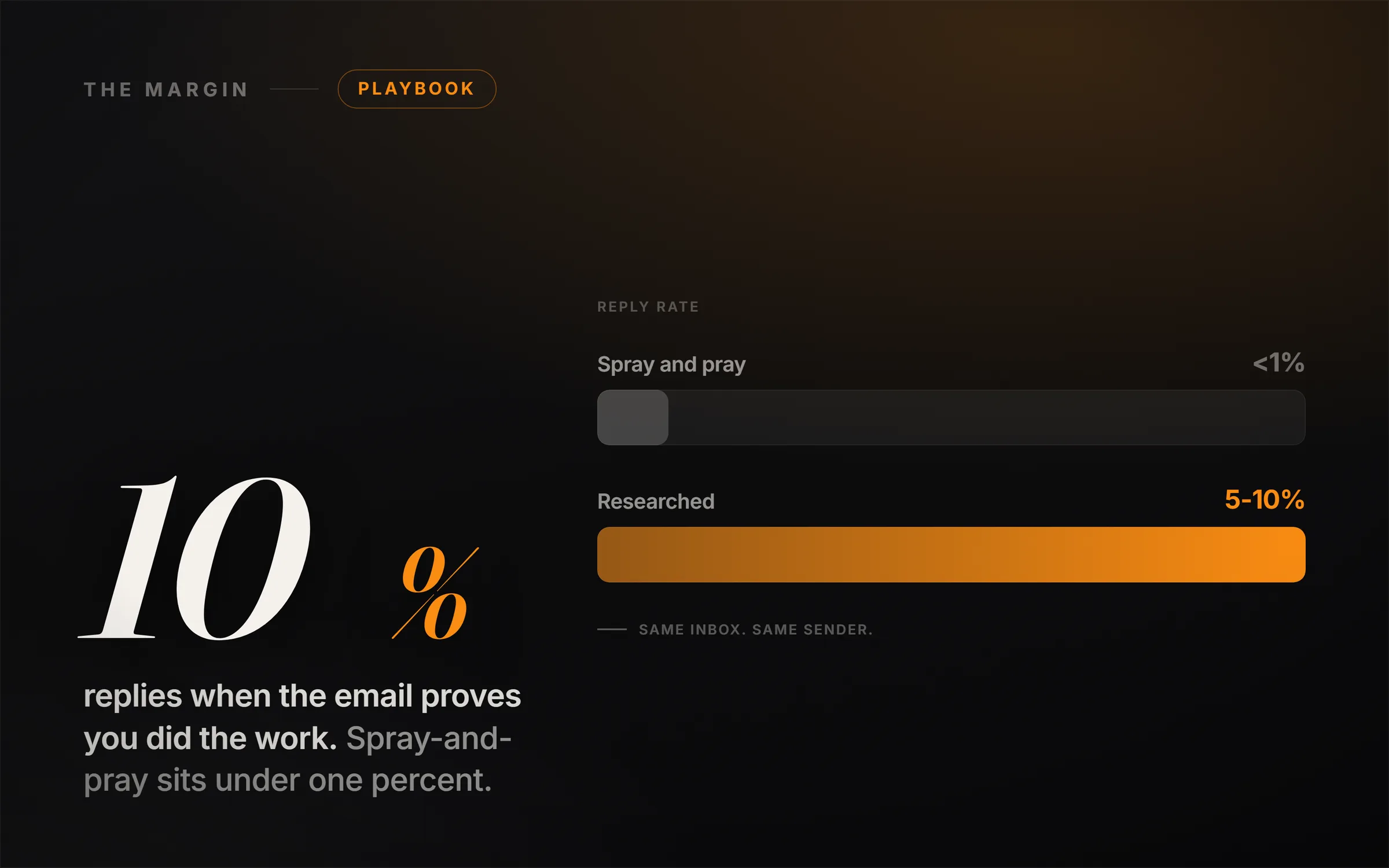
Every line traces to a fact anyone could verify on the live site. That is the difference between research and guessing, and it is why the resulting email cannot be read as spam. A note on honesty, because this genre is full of fake screenshots: I am not showing you a doctored "look, they replied" image, and you should distrust anyone who does. What I can tell you is the mechanism. Research-led emails to a well-chosen list realistically earn 5% to 10% replies, versus well under 1% for spray-and-pray, because the recipient feels studied rather than blasted. The number you get depends on your niche, your offer, and your consistency, and nobody can honestly promise you a specific figure.
What does it cost to send cold emails with Claude?
Almost nothing to start, and you only turn on paid tools as they pay for themselves.
- Claude is the research brain and the free tier runs the entire manual version. Claude Pro is $20 a month billed monthly, or $17 billed annually, and buys more usage. Alternatives: ChatGPT Plus or Google Gemini both run the same auditor prompt with small wording changes.
- Google Sheets is your free lead tracker.
- A separate sending domain plus Google Workspace is the one early cost that matters: about $10 to $12 a year for a domain at a registrar like Namecheap (alternatives: Porkbun, Cloudflare Registrar), plus roughly $7 a month for professional email via Google Workspace (alternative: Microsoft 365 at a similar price). You send cold email from a separate domain so a spam complaint can never damage your real one.
- Apollo.io finds the decision-maker on its free tier (alternatives: Hunter.io, Clay, or reading the name off the company site for free).
- A sending tool like Instantly warms your inbox and sends the sequence at volume, from $0 to start and about $47 a month once you are sending, including unlimited inboxes and automated warmup. Alternatives: Smartlead (smartlead.ai, around $39 a month, strong for many inboxes), Lemlist (lemlist.com, around $59 a month, best-in-class personalization), or sending small volumes straight from Gmail with a free mail-merge extension.
Total to start is near zero, and about $60 to $100 a month once you are sending at volume, which a single client covers several times over. The expensive part, the hour of research per lead, is exactly the part Claude does for free.
Is cold email legal?
Yes, cold email to a business is legal in the United States and most places, as long as you follow a few clear rules. This is not legal advice, and if you are sending into a specific country you should check a current source. The essentials for 2026:
- CAN-SPAM (United States). B2B cold email to a work address needs no prior consent, provided every email has an accurate "From" name and address, a non-deceptive subject line, a valid physical mailing address, and a clear, honored opt-out. A plain line like "Not relevant? Just reply and I'll leave it there" satisfies the opt-out. Penalties run over $53,000 per non-compliant email, so the opt-out and the address are not optional.
- GDPR (European Union and UK). Stricter. You generally rely on "legitimate interest," must be able to justify contacting that specific person, and must honor removals immediately.
- CASL (Canada). Stricter still, closer to requiring consent. Research it specifically before emailing Canadian prospects.
The practical rule: email real people at real business addresses, be honest about who you are, include a physical address and a one-line opt-out in every message, and remove anyone who asks, instantly. Do that and you are compliant almost everywhere.
Turning this into income
You can point this engine at your own offer to book your own sales calls, or you can run it for other businesses as a service (appointment setting, also called lead generation) for a monthly retainer. A single client at $500 a month covers your entire tool stack many times over, and because the research is nearly free, the margin is almost all yours. The honest catch is the one this whole genre skips: the engine only pays while it runs, and the first two silent weeks (warmup finishing, replies lagging behind sends) are where most people quit. The ones who win are not more talented. They kept sending through the quiet stretch.
If you want the wider map of services you can run with this tool, the outreach operator is one of seven I broke down honestly in 7 Claude AI Side Hustles That Actually Pay, and the local-business angle is the Main Street AI consultant path. The full library of build-it-out walkthroughs lives at ideasrepay.com.
Pick one niche, research ten real prospects with the prompt above, and send. Not a course, not a landing page. Ten researched emails to ten real humans before Monday. Everyone else will read this and do nothing, which is exactly your advantage.