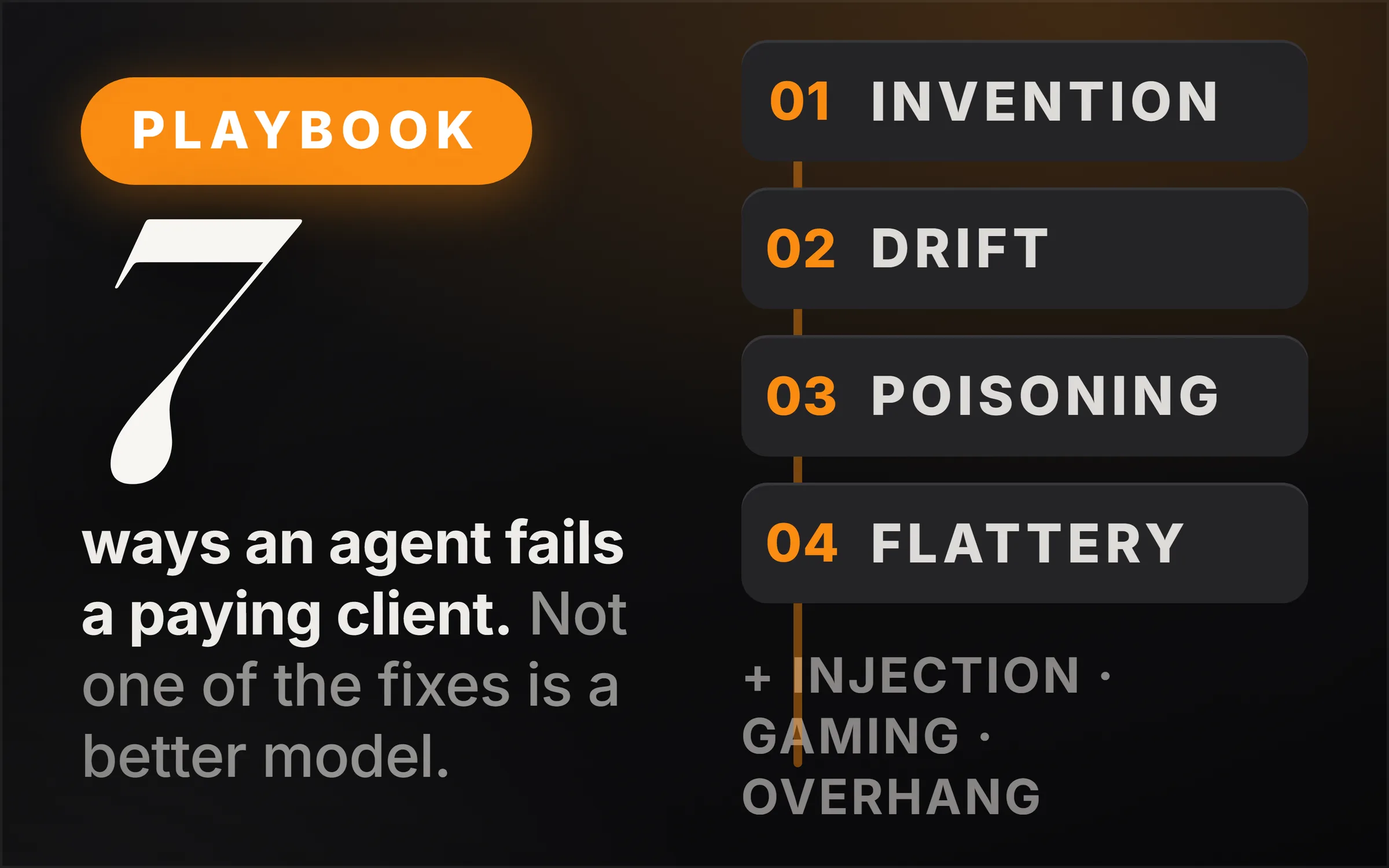
You can make money with Claude by selling a service that uses it, not by selling access to it. The seven that genuinely work in 2026 are ghostwriting a founder's posts in their voice, turning one long video into a month of content, generating batches of ad angles, getting brands recommended inside AI answers, running personalized cold outreach, building small working tools for clients, and wiring up automations that save a business real hours every week. Every one of them can be started this weekend with a $20 subscription. The catch, and it is a serious one, is that research already shows AI is driving down pay in exactly the commodity end of this work, so which version of these services you sell matters more than which service you pick.
I am writing this from inside the bet. We built IdeasRepay as a cold start with no audience, using these tools daily, so this is not a list assembled by someone who has never opened Claude. What follows is the honest map: what each hustle is, what it really pays, what Claude actually costs, and the study that should change how you position every one of them. Every number is from a named source.
In the video I open Claude and actually run all seven on screen, real prompt, real output. The written breakdown below stands on its own and goes deeper on the rates, the tooling costs, and the research the video does not have room for. Read it, watch it, or both.
Can you actually make money with Claude AI?
Yes, but almost never by selling Claude's output as the product. You make money by selling a service that a business already wanted, where Claude collapses your delivery time from hours to minutes and you keep the difference. That distinction sounds academic and it is the entire difference between a hustle that pays and one that dies in six weeks.
Here is why it matters so much. A client is not paying for words, code, or ad copy. They are paying to stop losing money, or to start making more of it. The moment you position yourself as "I use AI to write things cheaply," you have entered a race to the bottom against every other person with a $20 subscription, and against the client's own ability to just open Claude themselves. The moment you position yourself as "I own this outcome for you," the tool becomes invisible and the price stops being about your typing speed.
Every hustle below works in the second frame and fails in the first. Hold on to that as you read.
What does Claude cost, and what are the alternatives?
Claude has a free tier, and the paid plan that almost everyone doing client work ends up on is Claude Pro at $20 a month billed monthly, or $17 a month billed annually, which includes Claude Code. Above that sits Claude Max, starting at $100 a month, which is worth it only once you are hitting usage limits regularly, which realistically means you already have clients paying you.
Alternatives if Claude does not fit: ChatGPT Plus ($20 a month, stronger image generation and a bigger plugin ecosystem), Google AI Pro (about $20 a month, deeply tied into Gmail, Docs, and Drive if your client work lives in Google's world), and open models run locally (free but slower and materially weaker at long-form writing and reasoning). The concepts in every hustle below transfer to all of them. I recommend Claude for these specifically because it holds a voice over long documents better than the others, which matters enormously for the ghostwriting and repurposing work.
The 7 Claude AI side hustles
1. The Ghostwriter
You write a busy founder's LinkedIn posts, emails, and scripts in their exact voice. You feed Claude a handful of their old posts, it learns their rhythm, and from then on you write as them. The reason people pay is not the typing. It is that an executive knows he should be posting, has strong opinions, and will never sit down and write. You are selling him his own voice back without the hour it costs him.
On what it pays, I am going to do something the rest of this genre refuses to do and show you where the numbers come from, because almost every "$2,000 to $10,000 a month" figure you will read for this is an agency's own marketing with no data behind it. Here are two real, published anchors instead. The ghostwriting agency Column publicly lists its LinkedIn packages from $2,000 a month for roughly fifteen pieces of content. Meanwhile on Upwork, freelance ghostwriters list at $20 to $45 an hour. Those two numbers describe the entire game: the hourly rate is the commodity floor you are trying to escape, and the retainer is what the work is worth once you own the relationship rather than bidding for it. The full system for finding these clients and pricing the retainer is the LinkedIn ghostwriting blueprint.
2. The Repurposer
Every creator and founder makes one good long thing, a podcast, a webinar, a long video, and then lets it die. You turn that single asset into a month of content. Drop the transcript into Claude, pull the strongest moments, and rewrite each one natively for each platform, plus a newsletter.
You are not selling editing. You are selling the client's calendar back to them. For a real price anchor rather than a made-up one: the repurposing service ShortVids publicly charges $999 to $9,999 a month to turn podcasts into short-form content, and Vidpros publicly charges $1,000 a month for a part-time dedicated editor. Those are the incumbents you are pricing against, and they are doing it with human editors. This maps almost exactly to the podcast amplification blueprint.
3. The Ad Machine
The winning ad is almost never the first one written, so brands find winners by testing many angles, and writing many angles by hand is slow and expensive. You produce them in batches: ask Claude for twenty-five scroll-stopping hooks with the constraint that none of them may sound like an ad, and you get openings that sound like a real customer blurting something out.
You charge per batch or on a retainer. The margin is almost pure, because your only real cost is the taste to pick the good ones from the mediocre ones, and that taste is the actual product. There is no blueprint for this one yet; it is a standalone play you can run today.
4. The Answer-Engine Optimizer
For twenty years the game was ranking on Google. The new game is being named when someone asks an AI for a recommendation. When a customer asks Claude or ChatGPT for the best option in a category, a handful of brands get mentioned and those brands get the sale. Most companies have no idea whether they appear at all. You check, you show them the gap, and you help them become the answer.
This is the newest and least crowded item on the list, and it is also the one where you are most likely to be lied to, so here is the truth from both sides. People are genuinely paying. WebFX publicly lists AI-search optimization from $3,000 a month; Profound raised $96 million at a billion-dollar valuation in February 2026 serving enterprise clients; the Berlin startup Peec AI disclosed $4 million of ARR within ten months. The budget is real.
And the traffic is tiny. AI tools send well under 1% of all web traffic (SparkToro/Similarweb, 2026), and Pew found that when an AI summary appears, users click a source link on just 1% of visits. Worse for the vendors: SparkToro's testing found that asking the same AI the same question rarely returns the same brands twice, which means "AI rank tracking" is largely selling noise. Google itself states in its own documentation that optimizing for AI experiences "is still SEO" and that no special files or markup are required.
So the honest, sellable version of this service is: measure a brand's share of voice across many runs, not its "rank"; improve the underlying content and citations the way good SEO always did; and tell the client plainly that this is an early position in a channel that is growing fast from a very small base. Sell it that way and you have a defensible service. Sell it as a traffic firehose and you are the thing this article is warning you about.
5. The Outreach Operator
The oldest business on earth in a new coat: helping companies book more sales conversations. The old way was blasting an identical cold message to a thousand people. The new way is personal at scale. You give Claude a prospect list and have it write a genuinely specific opening line for each one, built on something true about that company. A human takes over the second anyone replies.
Real published anchors: Cleverly charges $397 to $997 a month for LinkedIn lead generation, while the outsourced sales firm SalesRoads starts at $9,950 per four weeks. You are pricing somewhere in that canyon. Two warnings, and they are not decorative. The reason this works is the specificity, so the moment you let it become generic AI spam it stops working and you have burned the client's domain reputation doing it. And cold email is regulated: under CAN-SPAM the FTC can levy penalties per non-compliant email, currently over $53,000 each. Learn the rules before you send a single message on a client's behalf.
6. The Weekend App Builder
Small businesses are full of small broken things: a clunky spreadsheet, a form that does not submit, a quote calculator they never built. You describe the tool to Claude in plain English and get back working code, not a picture of a tool. You are not becoming a software company. You are solving one painful, specific thing for one business and charging a few hundred to a few thousand dollars for it.
Do it twice and you have a portfolio. Do it ten times and you have a studio, or a product of your own. The path from a first tiny build to paid client work is the vibe-coded micro-SaaS blueprint.
7. The Automation Agency
The highest ceiling on the list, because you stop selling words and start selling saved hours. Every small business bleeds money on repetitive work: missed calls, unanswered messages, follow-ups that never happen. You build a quiet system that handles it. Have Claude draft the brain of an AI receptionist for a dental practice, the greeting, the common answers, the booking logic, and a business that was losing calls all day is now capturing them at two in the morning.
You are not a nice-to-have, you are plugging a hole that was bleeding revenue, which is why agencies like this hold clients for years. And this is the one hustle on the list where the unit economics are fully checkable in public. AI receptionist vendors publish their prices: TensorLinks charges $399 a month plus a $199 setup for a dental AI receptionist, Rosie runs $49 to $299 a month. The human alternative, a live answering service like Ruby, runs $250 to $1,725 a month. And the underlying voice compute costs roughly $0.05 to $0.31 per minute (Retell, Vapi). That spread, between what a business already pays a human service and what the compute actually costs, is your margin, and you can show a client the whole calculation on one page.
This is the AI automation agency blueprint, and it is honestly where a lot of people should aim.
Which Claude side hustle should you start with?
Start with the one where you already understand the customer, not the one with the biggest number next to it. If you have ever worked in an office with executives, the ghostwriter is the shortest path. If you know creators, the repurposer. If you have ever worked in or around a local business, go straight to the automation agency, because you already know where the money leaks.
If none of those is true, the honest default is the ghostwriter, for one reason: it has the shortest distance to a first paying client, and nothing in this game matters as much as getting paid once. The first dollar changes how you think. Everything after it is easier.
Picking one, honestly
- Fastest to a first dollar: the Ghostwriter. Low skill floor, an obvious buyer, and a retainer from day one.
- Highest ceiling: the Automation Agency. Slower to start, but it becomes a real business rather than freelance work.
- Least crowded right now: the Answer-Engine Optimizer. A genuinely new service, which means no incumbents and no price anchor.
- Most likely to be commoditized: anything you position as "cheap AI content." Do not build there.
The honest part: what the research actually says
Here is the study that should shape how you sell every one of these, and it is not the comfortable one. Hui, Reshef and Zhou, publishing in Organization Science, studied freelancers on Upwork after ChatGPT's release and found a 2% drop in monthly jobs and a 5.2% fall in monthly earnings in the most affected occupations. Separately, research published in Management Science found job posts for writing and coding work down about 21% within eight months of ChatGPT's launch, and image-creation gigs down about 17%.
Now the finding that should genuinely worry you, because it is the opposite of what everyone assumes. In the authors' own words: "top freelancers are disproportionately affected by AI." Being excellent did not protect anyone. High past performance did not moderate the damage at all. Brookings explains the mechanism plainly: AI levels the playing field, letting a mediocre freelancer produce output comparable to a great one, so clients simply stop paying a premium for experience. And the effect grew over the observation window rather than fading.
Read that carefully, because it kills the most common piece of advice in this entire genre. "Just be better than the AI-slop crowd" is not a strategy. On a commodity marketplace, being better is exactly what stops being rewarded.
So the real lesson is not "be a better writer." It is get off the commodity marketplace entirely. The freelancers who got hurt were selling interchangeable tasks to strangers through a platform that ranks them by price. The escape is to own the client relationship and the outcome, where you are not one of forty comparable bids but the one person who understands this founder's business and is accountable for a result. Every hustle above works in that frame and dies in the other one. That is the whole game, and it is why the blueprints are about getting and keeping clients, not about prompts.
Why most "make money with AI" advice is a trap
Because the category is an active fraud-enforcement target, and because the strategy it usually sells does not work even when it is legal. Both halves of that are worth ten minutes of your attention before you spend a year of your life.
On the fraud: in September 2024 the FTC announced Operation AI Comply, a sweep of cases against companies claiming AI tools would let people earn thousands a month in passive income. In the FTC's own words about one of them, Ascend Ecom, "for nearly all consumers, the promised gains never materialize, and consumers are left with depleted bank accounts and hefty credit card bills." Another operator, Ecommerce Empire Builders, was permanently banned from selling business opportunities with a judgment of nearly $9.8 million. Then-chair Lina Khan put it plainly: "there is no AI exemption from the laws on the books." If someone is selling you a done-for-you AI income machine, you are the product.
On the strategy: the mass-produce-AI-content play is already dead, and there is now data proving it. Graphite's analysis found that AI-written articles overtook human-written ones in raw volume in late 2024, so the internet is genuinely flooded. But when they looked at what actually ranks, 86% of articles ranking in Google Search were written by humans, and among top-ranking articles only 7% were AI-generated. Roughly 82% of the articles cited by ChatGPT and Perplexity were human-written too.
Sit with that. Half the web is now AI content, and almost none of it earns any traffic at all. Volume is not a strategy, because volume is precisely the thing that stopped being scarce. Every hustle on this list works because a human is accountable for a specific outcome for a specific client. None of them works as a content-cannon.
What Claude cannot do for you
It cannot find you clients. That is the whole job, and it is the part every one of these hustles has in common. Claude will do the work brilliantly and will not send a single email on your behalf to someone who might pay you. The bottleneck was never production, and the moment AI made production nearly free, the bottleneck moved entirely to distribution and trust. We made the longer argument for this in The Moat Moved.
It also cannot supply taste. Twenty-five ad hooks are worthless if you cannot tell which three are good. A cloned voice is worthless if you cannot hear that it has drifted. The judgment is what the client is actually buying, and it is the one part of the work that does not come in the box.
Start one this weekend
Pick the single hustle that made you lean in, and run it once for a real person before Monday. Not a course, not a landing page, not a business name. One piece of work for one human who might pay. If you want a wider view of the grounded options first, we mapped the honest versions in Realistic AI Side Hustles for Beginners, and if you want to attack the local-business end of this properly, that is the Main Street AI consultant path.
You do not need seven. You need one, run for longer than everyone else was willing to. If you want the one with the highest ceiling built out end to end, the pricing, the outreach, the delivery, the retainer, it is laid out in the AI automation agency blueprint on ideasrepay.com.
Everyone else is going to watch the video and do nothing. That is your actual advantage.