There is a particular kind of person who did everything right in 2024 and got buried anyway.
They learned the tools early. They could write a clean prompt, chain three of them together, spin up a faceless channel, and ship a week of content in an afternoon. For a while, that was enough. The output looked professional, it went out fast, and there was still enough open water that fast and professional got noticed.
Then everyone else learned the same thing.
By the middle of this year, the phrase "AI slop" was showing up online roughly nine times as often as it did two years ago. Industry trackers estimate that more than a fifth of what YouTube now recommends is AI-generated. The same surveys that found 60 percent of people preferred AI-assisted creator content in 2023 now put that number at 26 percent, and more than half of audiences say they pull back the moment they suspect a machine made the thing they are looking at.
Read those numbers together and a story falls out of them. The skill that an entire cohort rushed to learn did not disappear. It did something worse. It became ordinary.
Table stakes are not an edge
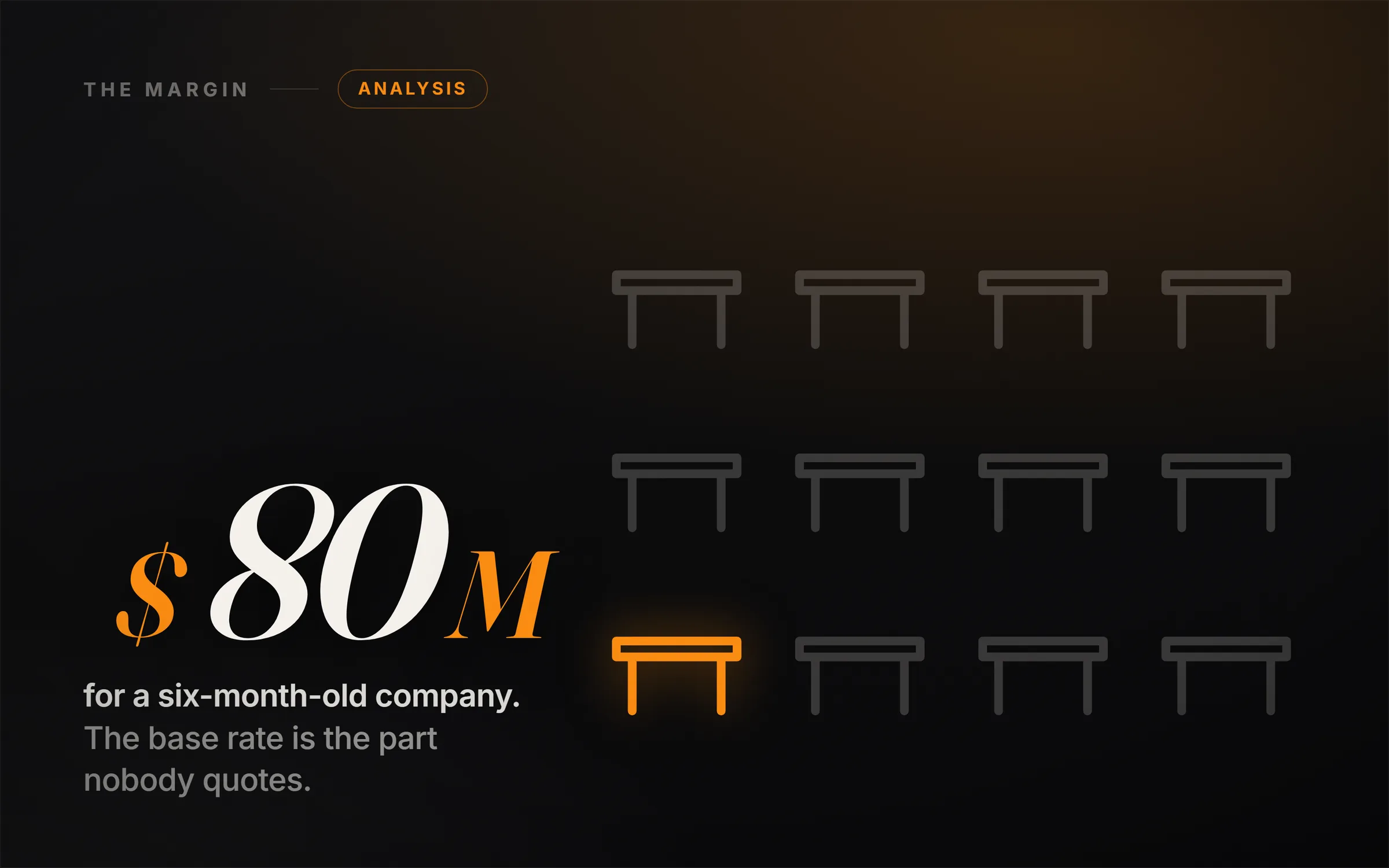
There is a clean word for a capability that everyone has: table stakes. It is the ante you pay to sit at the table. It is not the hand you win with.
This is the quiet event of 2026. AI fluency crossed the line from edge to ante. McKinsey has been writing about the same shift in the enterprise, the move "from AI table stakes to AI advantage," because the large companies hit this wall first. When every competitor has the same model, the model is no longer where the contest happens.
You can watch the hype absorb the news in real time. Gartner now calls this the year of disillusionment for AI agents and expects more than 40 percent of agentic AI projects to be cancelled by the end of 2027. That is not a story about the technology failing. The technology is extraordinary and getting better. It is a story about a market discovering that owning a powerful, widely available tool is not the same as having an advantage. Everyone bought the same drill. Nobody can sell a hole.
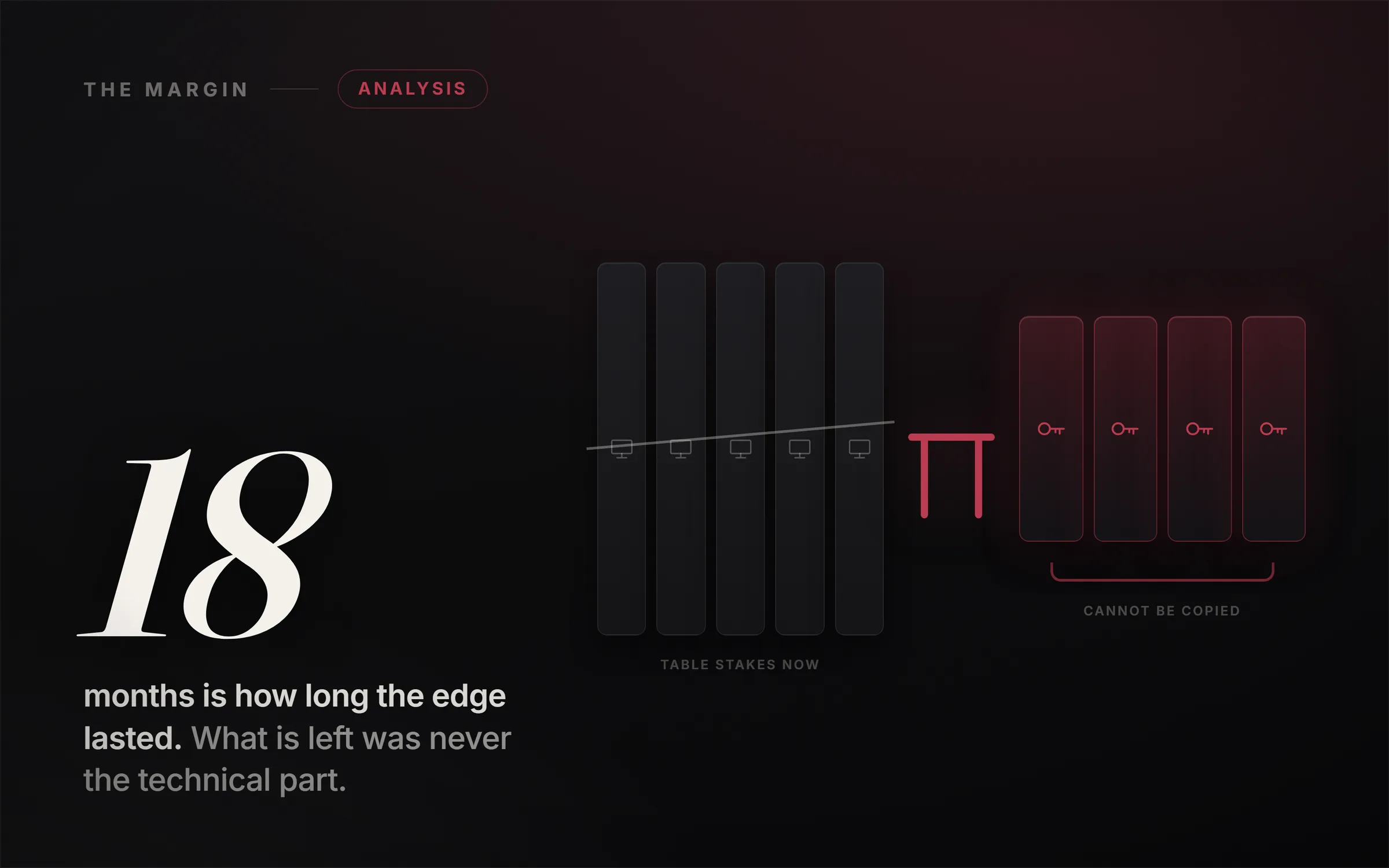
When the tool becomes universal, the tool stops being the differentiator. The advantage moves to whatever the tool cannot manufacture.
That sentence is the whole argument, so it is worth sitting with. If a capability can be acquired by anyone in a weekend, it cannot be the thing that separates you. By definition. The edge has to live somewhere the copy machine cannot reach.
So where did it go?
The four things the machine cannot copy
When you sort the durable advantages from the disposable ones, they keep coming back to the same short list. Not because anyone decreed it, but because these are the things that resist being generated on demand.
- Taste and judgment. A model can produce a thousand options. It cannot tell you which one is right for this audience, this moment, this room. That decision is a compression of everything you have seen and gotten wrong before, and it does not transfer in a prompt. The people winning with AI right now are not the ones who let it decide. They are the ones who use it to generate ten times faster and then bring human judgment to the cut.
- Trust, and the relationships trust is made of. A machine can draft the email. It cannot be the person the reader already believes. Trust is time-stamped. It accrues slowly, through repeated contact and kept promises, and it is the single hardest asset to fake because faking it is the fastest way to lose it.
- A point of view. This is the one most people skip, and it is the most defensible of all. A model predicts the most likely next word. It is, structurally, a machine for producing the consensus. A real position, an argument that some smart people will disagree with, is the one thing it is built not to generate. In a feed drowning in the average of everything ever written, the average is now worthless and a stance is rare.
- Distribution you own. Reach you rent (the algorithm's good mood this week) can be revoked without notice, and increasingly is. An email list, a community, a name people search for on purpose: these are owned. The creator economy figured this out the hard way, which is why the fastest-growing 2026 monetization models all share a spine of recurring revenue and audiences the creator actually controls, not borrowed attention.
Notice what is not on that list. Not one of these is a technical skill. Not one of them got harder to access when the tools got cheaper. If anything, they got more valuable, because the flood of competent, soulless output made the scarce thing scarcer.
The test for whether you are building anything real
Here is a practical filter you can run on any project, side hustle, channel, or business you are thinking about starting. Ask three questions about the thing that is supposed to make it work.
The test
- Does it take time to build?
- Does it require accumulated experience that cannot be downloaded?
- Would it survive a competitor who has the exact same AI tools you do?
If the answer to all three is yes, you are building a moat. If the answer to any of them is no, you are building a sandcastle, and the tide in 2026 comes in fast. A faceless channel whose only advantage is "I can produce content cheaply" fails all three, which is precisely why that strategy stopped working the month everyone adopted it. A small audience that trusts your specific judgment in a specific lane passes all three, which is why it keeps compounding while the channels churn.
This is not a counsel of despair about AI. Use the tools. Use them aggressively. The point is to be ruthlessly clear about which job they are doing. AI is the fastest execution engine ever built, and it is a catastrophic identity. Let it run the work. Do not let it be the reason anyone should choose you, because it is the reason no one will.
Why this is the best possible news for a beginner
The instinct, reading all this, is to assume the bar went up. It did not. It moved.
For two years the implicit message to anyone starting out was that they were behind on the tools, that the technical learning curve was the wall, that the people who got there first had an unbeatable head start. That was briefly true and it is now false. The tool advantage decayed to nearly zero, which means the head start it bought decayed with it. The person who spent 2024 building a faceless content machine and the person starting clean this week are now competing on identical tooling.
What they are not competing on identically is taste, trust, point of view, and owned audience. And those were never gated behind a technical skill. They were gated behind something far more available to a beginner: the willingness to pick a narrow lane, have an actual opinion in it, show up as a real person, and stay long enough for trust to compound. That is not a developer's advantage. In many cases it is the opposite, because the person closest to a problem, with the strongest opinions about it and the least to unlearn, often has the better stance.
The flood of average content did not raise the wall in front of you. It cleared out everyone who was only ever going to produce average content, and it made the few human, specific, opinionated things stand out more than they have in a decade.
The tools are settled. Everyone has them. The contest, the part that was always going to decide who wins, is the part a machine was never able to enter. That is where the moat moved. It is, conveniently, exactly where a determined beginner is allowed to dig.
If you want to see one of these moats built from zero, with the actual numbers, lane selection, and week-by-week sequence laid out end to end, that is what our blueprints are for. The thinking here is free. The build is where we walk you the rest of the way.