A one-person company is a business owned and run by a single person who uses AI, software, and contractors to do the work that used to require a payroll. The reason everyone is suddenly talking about them is a real event: in June 2025, Wix acquired Base44, a six-month-old startup with no outside funding, and its founder Maor Shlomo was the sole shareholder (TechCrunch, June 2025). That happened. It is not a rumor and it is not a course ad. But the conclusion almost everyone drew from it, that one person with AI built an eighty-million-dollar company alone in six months, is not what the story says, and the details are more useful than the legend.
I am writing this from inside a one-person-shaped bet. We built IdeasRepay as a cold start with no audience, so I have no interest in selling you a fantasy about the solo founder as a superhero. What follows is the honest math: what really happened at Base44, what the average one-person business in America actually earns, what AI genuinely changed, and what it did not change at all. Every number below is from a named source, and the predictions are labeled as predictions.
The video tells the story as a story. The written breakdown below stands on its own and goes deeper on the sourcing, the base rates, and the parts of the legend that quietly fall apart when you check them. Read it, watch it, or both.
What is a one-person company?
A one-person company is a business with exactly one owner and no permanent payroll, where the leverage that a traditional company got from employees is bought instead: AI for the drafting and the code, software for the operations, and contractors for the spikes. The legal shell is ordinary, usually an LLC or its local equivalent. What is new is not the structure. It is how much output a single owner can now produce inside it.
The useful distinction, and the one almost every viral post gets wrong, is between solo-owned and solo-operated. A solo-operated business is one person doing all the work. A solo-owned business is one person holding all the equity while the work gets done by whatever combination of AI, tools, and hired help the owner chooses. Base44 was the second kind. Most of the headlines described it as the first kind. That single confusion is responsible for most of the bad advice currently being given about AI and solo founders.
It is worth being precise, because the fantasy is expensive. Nobody is claiming you should never hire. The claim worth taking seriously is narrower and far more interesting: the point at which you are forced to hire, and therefore forced to raise money and give away ownership, has moved much later than it used to be.
Did a solo founder really sell his company for $80 million?
Yes, and the specifics are far more instructive than the headline. Maor Shlomo, a former Israeli intelligence officer and a genuinely experienced engineer, started building Base44 in late 2024 as a side project. It let people build working apps by describing them in plain language. It reached 10,000 users in about three weeks, and in June 2025 Wix acquired it, with Shlomo as sole shareholder because he had never raised outside capital (TechCrunch; Calcalist).
Now the two details that the viral version removes, both of which come straight from Wix.
First, he was not alone. Base44 had about eight employees at acquisition, which Wix confirmed to TechCrunch. He was the sole shareholder, not the sole worker. He had hired a small, excellent team and had simply never sold a share of the business to do it.
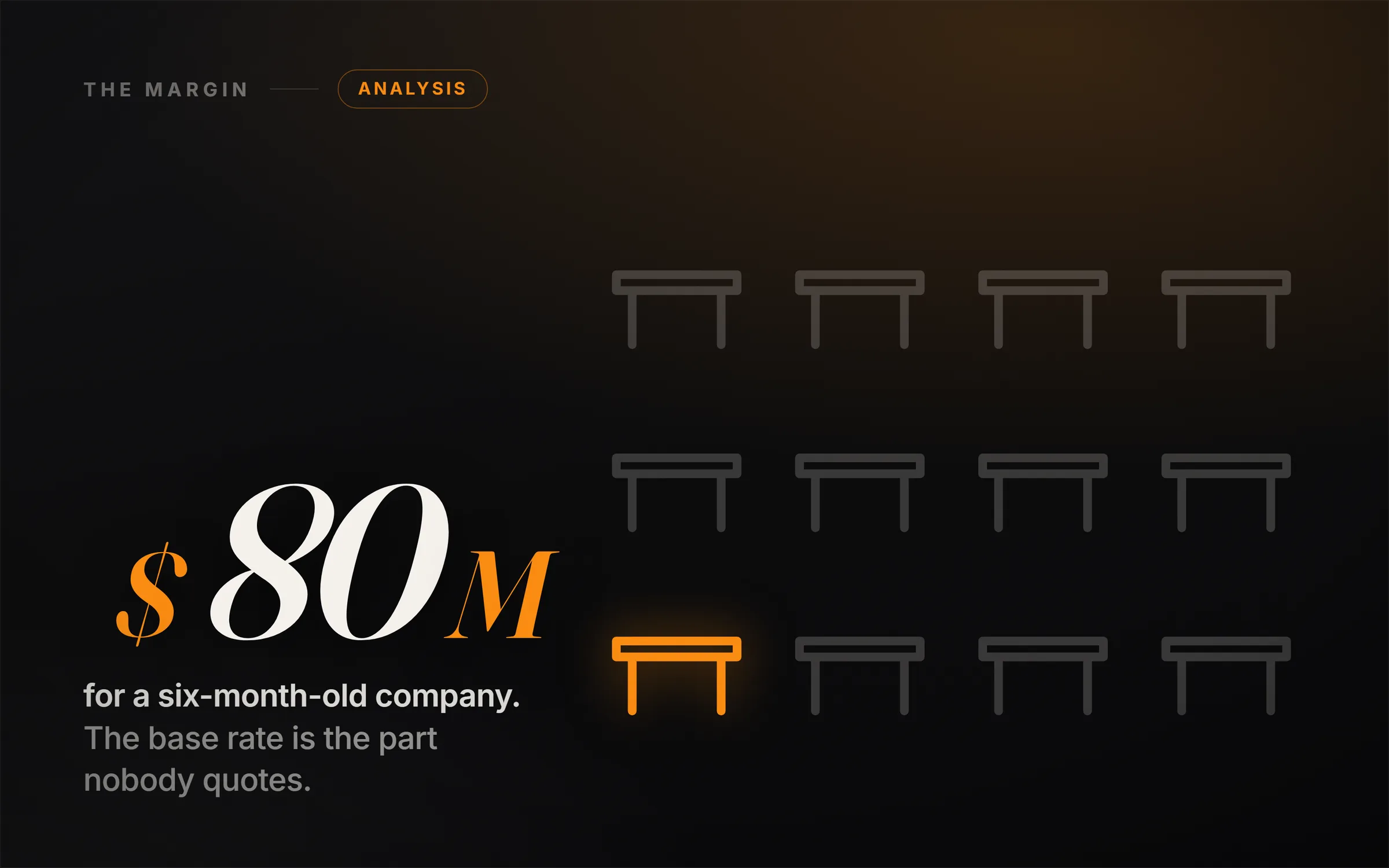
Second, the $80 million is not what it sounds like. Wix's own announcement describes "initial consideration of approximately $80 million plus additional earn-out payments paid through 2029 predicated upon certain performance metrics," and then adds, in the same release, that it expected "approximately $25 million in retention bonus payments paid to Base44 employees in 2025 as part of the above initial consideration." So roughly a quarter of the famous number went to the team, and a meaningful part of the upside was tied to hitting targets years into the future. It was a superb outcome for him. It was not eighty million dollars landing in one man's account for six months of solo work.
So what really made this possible was not that AI let one man do the work of fifty. It was that AI, plus a product he could sell directly to users from day one, let him reach real scale before he ever needed an investor. He kept 100 percent of a company that a decade ago would have required a seed round, a co-founder, and a dilution table. The miracle here is a cap table, not a workload.
How much does the average one-person business actually make?
About $57,600 a year, and this is the single most important number in the entire conversation. The US Census Bureau counts 30,427,808 American businesses with no paid employees, taking in $1.75 trillion between them (2023 Nonemployer Statistics, the latest available). Divide one by the other and the average zero-employee business in the United States turns over roughly fifty-seven thousand six hundred dollars a year.
That average is also flattering, because a mean gets dragged upward by outliers, so the typical one-person business earns less than that. The full distribution is the part nobody ever shows you, and it is worth sitting with for a moment.
What 30 million one-person businesses actually earn (US Census, 2023)
- Three quarters make under $50,000 a year. 75.5% of all US zero-employee businesses.
- Only 13.2% clear $100,000 a year. About 4 million out of 30.4 million.
- About 1 in 260 clears $1 million a year. That is 0.385% of them.
- 905 businesses out of 30.4 million clear $5 million. Roughly one in thirty-three thousand.
- And these are receipts, not profit. Gross revenue, before costs, before tax, before you pay yourself.
Hold that next to the Base44 story and you have the honest picture. The eighty-million-dollar exit is not the middle of this distribution. It is not even the tail. It is a rounding error at the very edge of the tail, which is precisely why it was global news. Building your plan around it is like building a retirement plan around a lottery ticket, and the fact that the ticket genuinely paid out for one man in Israel does not change the odds on yours.
This is not an argument against starting. It is an argument for knowing what you signed up for. A one-person business that reaches $100,000 a year puts you in the top 13% of thirty million people, and that is a genuinely excellent life outcome that will never once be posted about on X.
The nonemployer sector is nonetheless the fastest-growing part of American business. From 2012 to 2023, the number of zero-employee businesses grew an average of 2.7% a year while employer businesses grew only 1.1% (US Census Bureau), and they now make up more than three quarters of all US business establishments. More people choose this every year.
Why is the one-person company suddenly possible now?
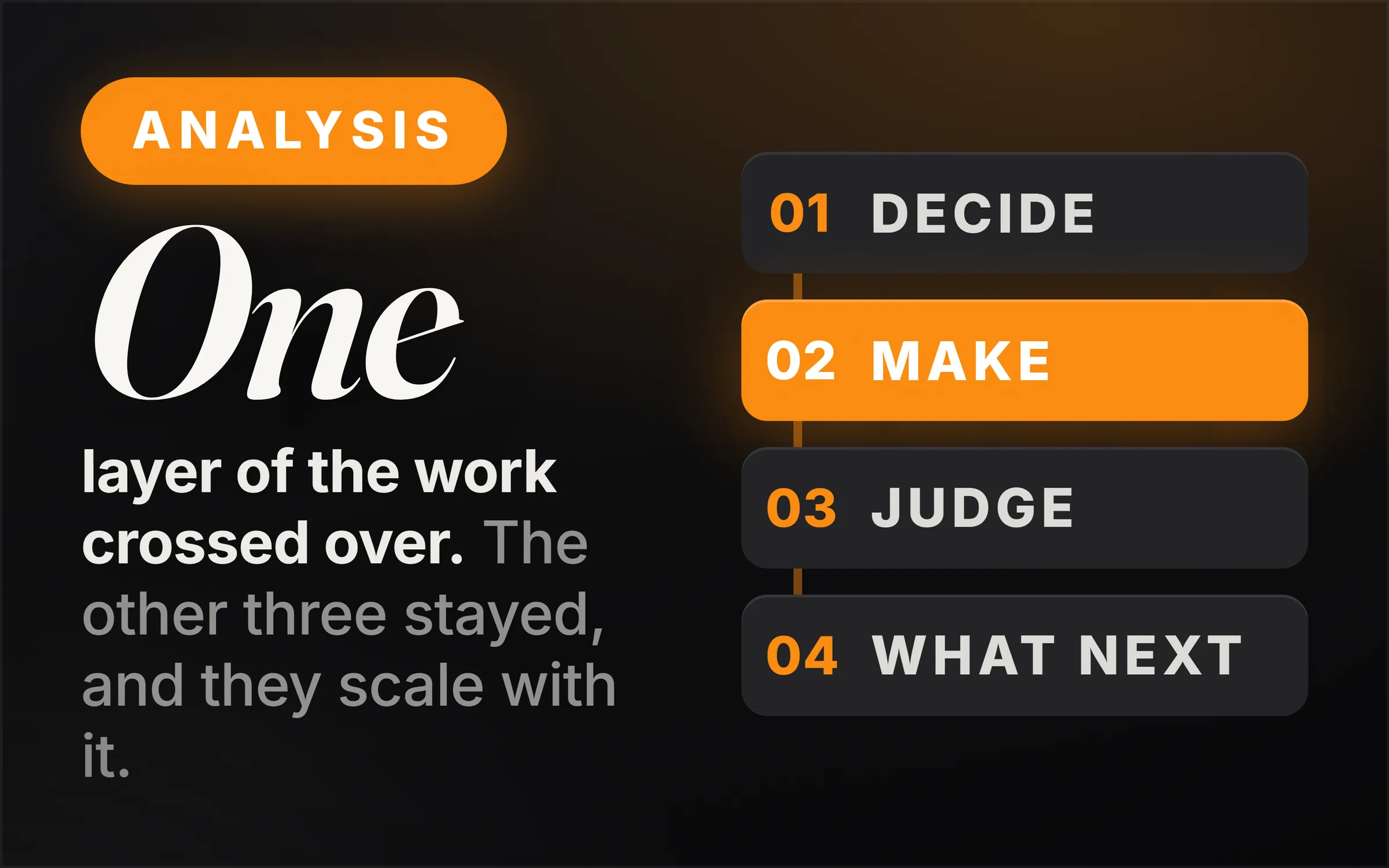
Because the three things that used to force you to hire have each collapsed in price at the same time. Building software used to require engineers, and now a non-engineer can describe a tool in plain English and get a working one back. Producing content used to require a team, and now it requires an afternoon. Operations that used to require staff now run on software that costs less per month than a single hour of the labor it replaces.
Sam Altman put the extreme version of this on the record in a 2023 conversation with Reddit co-founder Alexis Ohanian, reported by Fortune: in his group chat with other tech CEOs, he said, "there's this betting pool for the first year that there is a one-person billion-dollar company," something that "would have been unimaginable without AI and now will happen." That is a prediction, not a fact, and you should hold it loosely. Hold on to it anyway for two minutes, because what happened to that prediction is the most instructive part of this entire article, and I have given it its own section below.
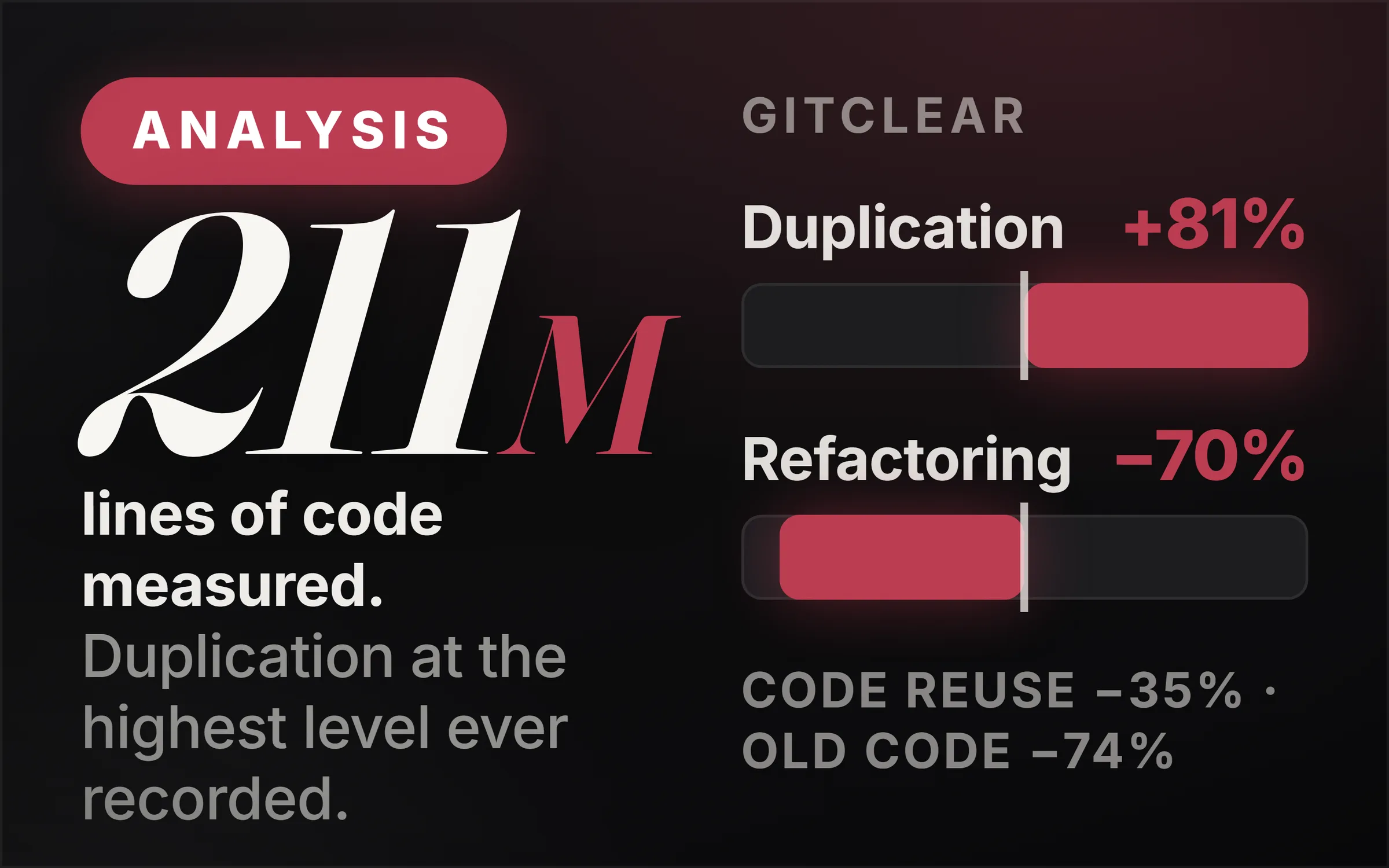
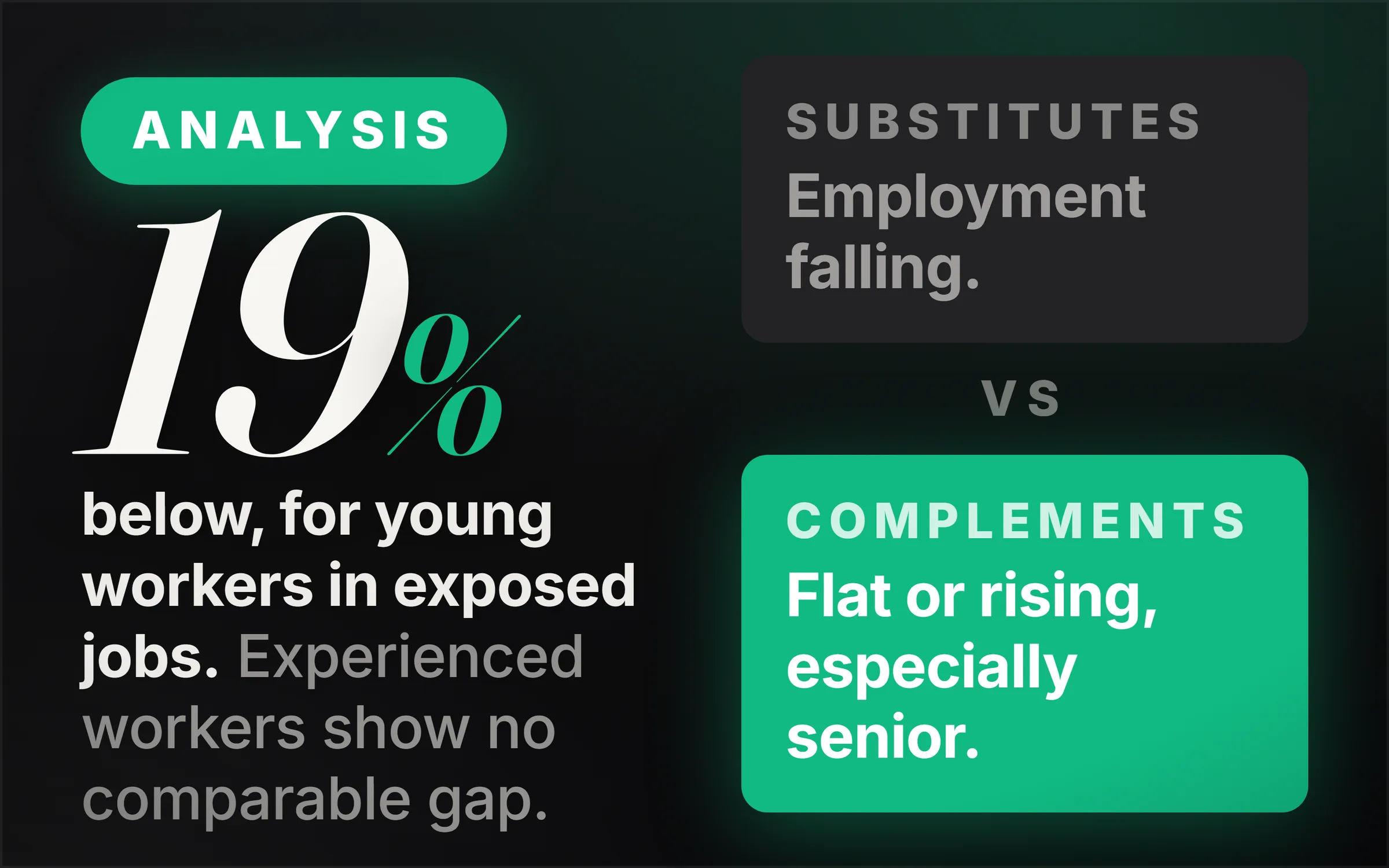
The honest counterweight is that AI is not a uniform accelerator, and the research is messier than the marketing. In a 2025 randomized controlled trial, METR found that experienced open-source developers working on their own large codebases were actually 19 percent slower when using AI tools, even though they believed they had been about 20 percent faster. The gap between how fast AI feels and how fast it is turns out to be enormous.
To its considerable credit, METR then partly walked its own headline back in February 2026. A later replication found a smaller slowdown for the original developers and an effect close to zero for newly recruited ones, and METR said its own design likely understated AI's benefit, because developers were quietly steering the hardest, most AI-suited tasks out of the study. So the fair reading is not "AI makes you slower." It is that the honest measured benefit, for experienced people on real work, is far smaller and far more conditional than the marketing implies. Which is exactly the sort of thing a one-person company needs to know before betting a year on it.
Has anyone actually built the one-person billion-dollar company?
No. And the story of the company that was crowned as the first one is the most valuable cautionary tale in this whole field, so it is worth telling properly.
On 2 April 2026, the New York Times published a profile of MEDVi, a GLP-1 telehealth business run by Matthew Gallagher, presenting it as the arrival of exactly the thing Altman had predicted. The numbers were staggering: $401 million in sales in 2025, a projection of $1.8 billion for 2026, and two full-time employees, Gallagher and his brother. The Times said it had been given access to the company's financials. Altman emailed the paper to say it appeared he had won the bet with his tech CEO friends, and that he "would like to meet the guy."
Within days it came apart. The FDA had issued MEDVi a warning letter dated 20 February 2026, six weeks before the profile ran, over misbranded compounded semaglutide and tirzepatide (Drug Discovery and Development). Subsequent reporting documented AI-generated "before and after" patient photos, advertising run under apparent fictitious personas with fabricated medical credentials, and a class action filed in March. Techdirt's write-up was titled, fairly, "The New York Times Got Played By A Telehealth Scam And Called It The Future Of AI." Forrester's analysts published a piece headed simply Beware The Magical Two-Person, $1 Billion AI-Driven Startup.
Sit with the layers of that for a second. The best newspaper in the world went looking for the one-person billion-dollar company. What it found was two people, not one. Their operation was not lean, it was outsourced, with the telehealth stack, the doctors, the pharmacies, and the compliance all run by other companies. And the reason the numbers looked so miraculous appears to be, at least in part, that the company was doing things a compliant business is not allowed to do.
That is the honest state of the art. The one-person billion-dollar company has not arrived. The nearest claimed example was two brothers standing on top of a large stack of other people's labour, and it did not survive six weeks of scrutiny. When someone shows you a headcount of one and a revenue figure with a lot of zeroes, the correct first question is not "how did they do it." It is "who is actually doing the work, and what are they not telling me."
What can one person still not do alone?
Sell to strangers, earn trust, and be known. Those have not gotten cheaper, and they are the whole business. AI collapsed the cost of making things, which means the world is now full of made things, which means the scarce resource is no longer the product. It is the attention and the credibility to put a product in front of someone who will pay for it.
This is the trap that catches nearly every new one-person company. The founder spends the leverage in the place where the leverage is most fun to spend it, which is building, and arrives three months later with a beautiful working product and zero customers. The building was never the constraint. We wrote the longer argument for this in The Moat Moved: when software becomes cheap and universal, the durable advantages left are trust, relationships, and distribution, and none of those was ever gated behind a technical skill.
Base44 is a perfect illustration, if you read it correctly. Shlomo did not win because he could code with AI. He won because he was building in public with an audience watching, he shipped something people immediately wanted, and he got 10,000 users in three weeks. The distribution came first and made everything else possible. Take the same product, build it in silence, and it sells for nothing.
Is starting a one-person company actually a good idea?
For the right person and the right goal, yes, and the reasons are unglamorous. You keep all the equity. You have no payroll to make, which means your break-even is low enough to survive a bad quarter. You can change direction in an afternoon. And you can start it on evenings and weekends without asking anyone's permission or taking anyone's money.
The costs are just as real and they are mostly psychological. There is nobody to catch your mistakes, and solo founders systematically overrate their own ideas because no one in the room is arguing. There is nobody to cover for you when you are ill or exhausted, so the business stops when you stop. And the loneliness is a genuine operational risk, not a feeling to be dismissed: the quiet middle stretch, where the thing works but almost nobody has noticed yet, is where most one-person companies quietly die. Not from failure. From attrition.
The version of this that works is unromantic. Pick a small problem that a specific group of people already pays to solve. Build the smallest real thing that solves it. Charge for it early, before it is beautiful, because the only signal that matters is somebody paying. Then spend the majority of your time, not the leftovers, on being found. That is the whole strategy, and it is boring on purpose.
How do you start a one-person company?
You start by narrowing until the problem is small enough for one person to genuinely win, then you build the smallest working version and put it in front of people who already feel the pain. The order matters, and almost everyone runs it backwards. The wrong order is: learn the tools, build the product, then look for customers. The right order is: find the people, understand what they would pay to have fixed, then build only that.
Naming the move is easy. Running it is the part worth doing carefully, and it is where the micro-SaaS blueprint does the real work: how to find a problem narrow enough that one person can own it, how to build a real product with AI when you are not an engineer, what it honestly costs to run, how to get the first paying users with no audience, and how to price it so that a few hundred customers is a real income rather than a rounding error. This article gives you the shape of the thing. The blueprint gives you the build.
If software is not your instinct, the same one-person structure works just as well as a service. A single trusted person delivering something valuable to a handful of clients is the oldest one-person company there is, and the ones we have mapped end to end are laid out in Realistic AI Side Hustles for Beginners.
The honest hard part
The story that made you click, a man alone in a room for six months walking out with eighty million dollars, is a lottery ticket dressed as a method. He had eight employees by the end. A quarter of the headline number went to them. He had an audience before he had a product. He was an experienced engineer, not a beginner following a course, and the market for exactly what he built happened to be white hot at exactly the moment he built it. Every one of those things was load-bearing, and not one of them is a step you can follow.
What is genuinely repeatable is the smaller, better thing underneath it. One person can now own the whole of something real. The cost of finding out is a few hundred dollars and some evenings, the downside is capped, and the base rate, a business making tens of thousands a year rather than tens of millions, is a life-changing outcome for a very large number of people even though it will never be a headline.
So build for the base rate and stay open to the tail. The people who make this work are not the ones who believed the eighty-million-dollar story. They are the ones who were still shipping in month six, when the excitement had worn off and nobody was watching yet. If you want the full build for the software version, it is laid out end to end in the micro-SaaS blueprint on ideasrepay.com.
The company of one was always possible. What changed is that it can finally be worth something.