The most expensive thing about starting a small business is not on any startup cost list, and the second most expensive thing is on the list at roughly two thirds of its real price.
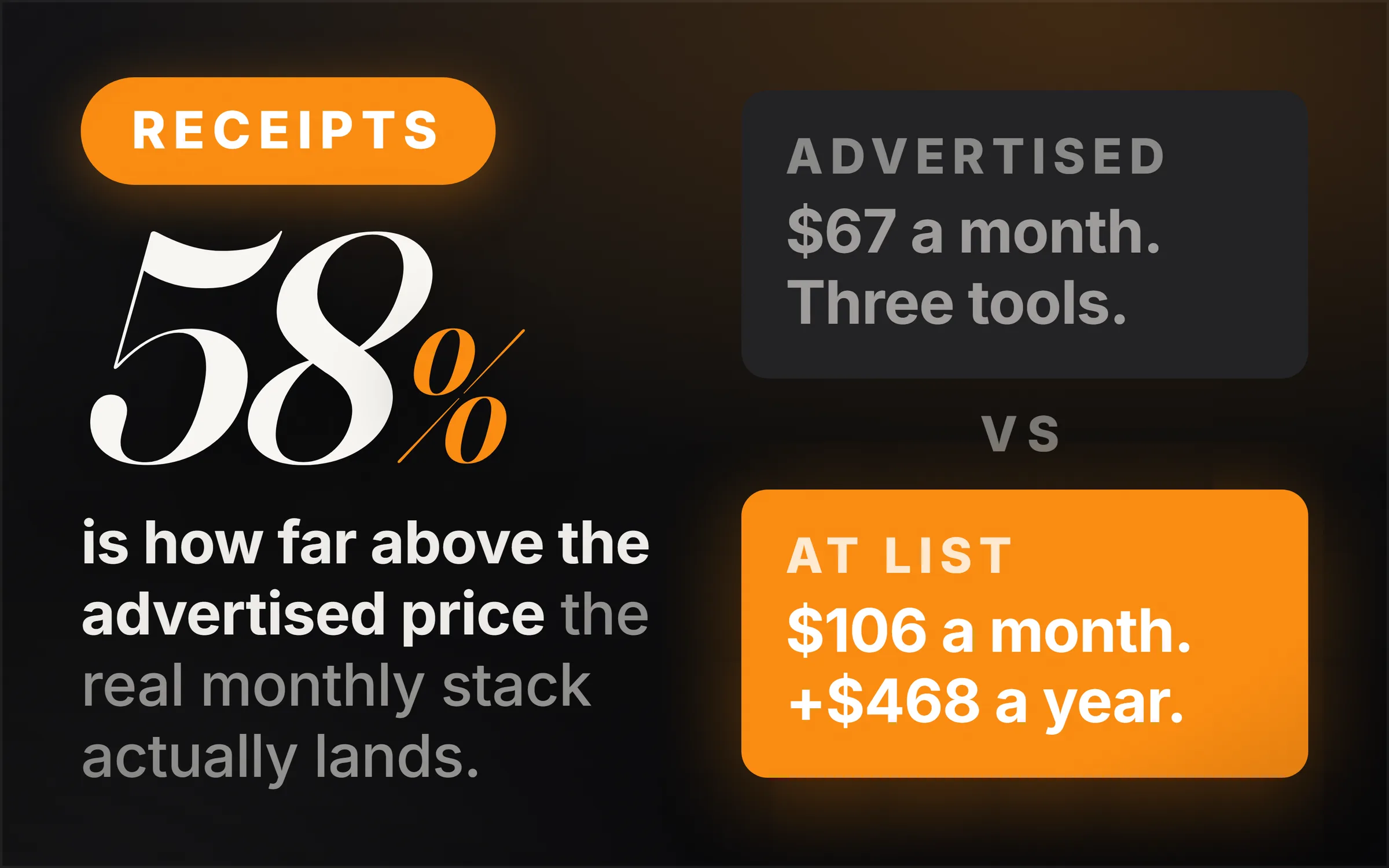
We priced the standard software, insurance and payment stack for six local service businesses by opening each vendor's own pricing page. A minimum working stack that advertises at about $67 a month costs about $106 a month at list price paying month to month, which is 58 percent higher and $468 a year. Every headline number in the category turned out to be conditional on something, and the conditions were different in each case.
That is the correctable part. The larger and less correctable part is that the biggest costs in most of these businesses are not payments at all, so no cost list contains them.
Why is every advertised software price wrong?
Because vendors publish the most favourable number they can defend, and the condition attached to it differs enough between vendors that you cannot learn the pattern from one page. Here are three, read from their own pricing pages and captured on 2 September 2026.
Advertised against real, three vendors
- Jobber, Core plan. Advertised $29 a month, which requires twelve months paid up front. $39 on a one-year commitment. $49 a month with no commitment. The page defaults to the annual view.
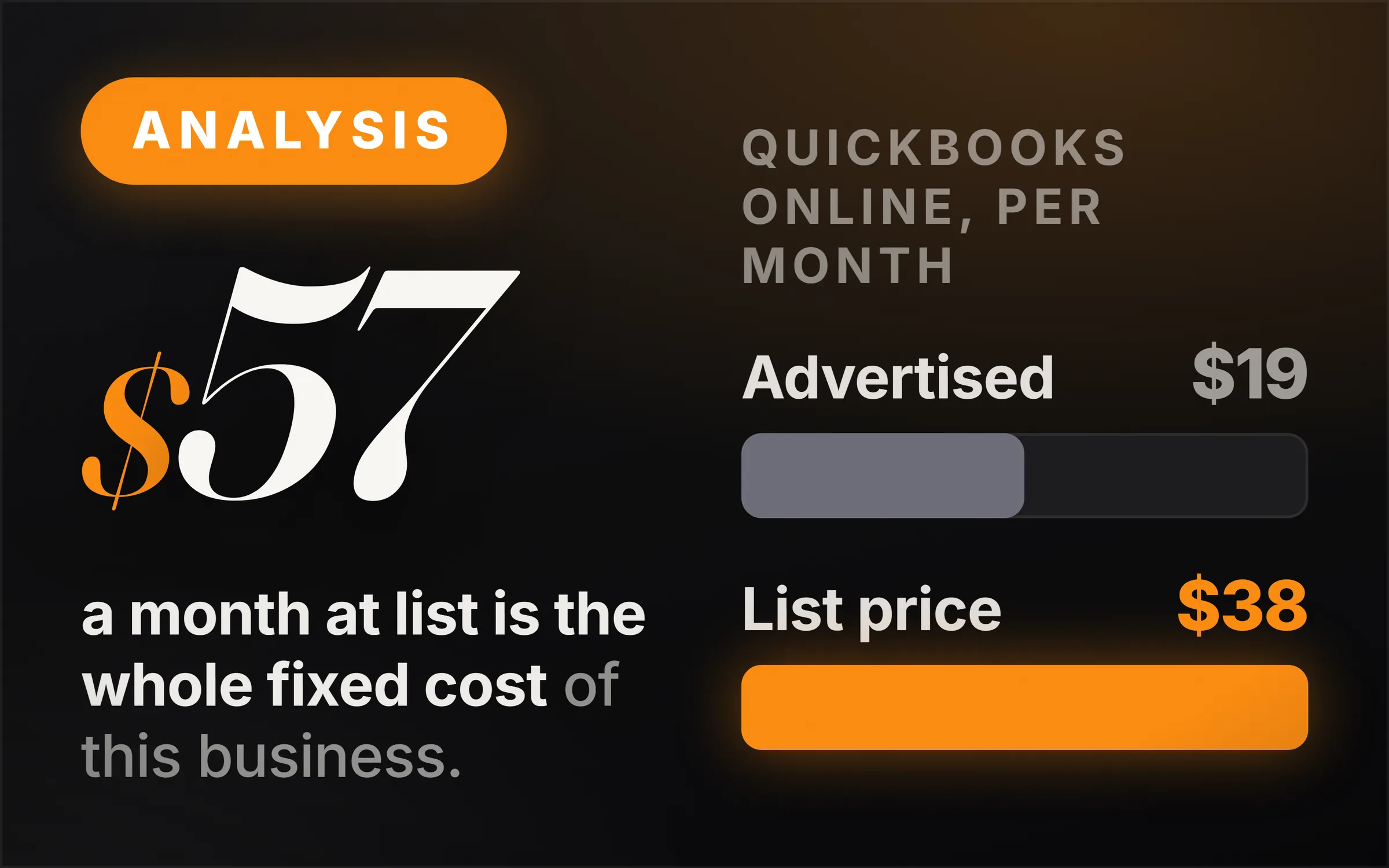
- QuickBooks Online, Simple Start. Advertised $19 a month, which is 50 percent off for three months. List price $38 a month. Essentials lists at $85, Plus at $140, Advanced at $340.
- Housecall Pro, Basic plan. $59 a month billed annually, $79 a month billed monthly.
Three vendors, three different mechanisms: an annual prepayment, a time-limited discount, and an annual billing default. A cost guide assembled by copying headline numbers records $29, $19 and $59, and every one of those is a number the reader will not pay in month four.
The correction is mechanical. Find the billing toggle before writing anything down, and budget the no-commitment monthly price. Committing a year up front to save $20 a month is reasonable for an established business and a poor trade for one that may not exist in twelve months.
What does the real stack cost?
For a local service business needing job management, accounting and liability cover, about $106 a month at list paying month to month: Jobber at $49, QuickBooks Simple Start at $38, and general liability from $19. The same three advertise at about $67.
Against the Census average for a solo firm in cleaning and landscaping, which was $26,409 of revenue in 2022 or roughly $2,201 a month, that stack is about 4.8 percent of the top line. Add card processing at typical volumes and it reaches roughly 7.6 percent.
For a business with no equipment the number is lower. A bookkeeping practice needs accounting software and insurance and nothing else, which is about $57 a month, or roughly 2 percent of that industry group's average revenue.
Both of those are genuinely reasonable overheads, and that is the honest good news. The point of this article is not that software is expensive. It is that the figure you plan with should be the one you will actually be charged, and that the gap between the two is large enough to matter to a business earning at the industry average.
What does an insurance "starting at" price mean?
It means the floor for the lowest-risk customer the insurer will write, and it is not a quote for you. Next Insurance publishes general liability "Starting at $19/month†", and the footnote reads "for some low-risk businesses."
That qualifier is almost always stripped out when the figure travels. An article listing "$19/month insurance" as a line item in a pressure washing or junk removal cost breakdown has quoted a floor that applies to a completely different risk profile. A business operating rotating blades, working at height, hauling waste on public roads or driving customers' vehicles is not a low-risk business, and its quote will not be the floor.
The honest way to use a published starting price is as a lower bound and a signal that the category is affordable, then to get an actual quote for the actual trade before committing to a plan. This is also the one line that should never be trimmed to make a budget work, because in most of these trades it is both the largest real risk and, for commercial clients, an entry requirement rather than an expense.
What does it cost to get paid?
More than most lists include, and the amount depends on a choice most people make by accident. Square's published rates are 2.6 percent plus 15 cents for a tapped, dipped or swiped card, 3.3 percent plus 30 cents online, 3.5 percent plus 15 cents for a manually keyed card or a card on file, and 1 percent with a $1 minimum and a $5 cap for bank transfer via invoice.
On roughly $2,201 of monthly revenue across twenty card-present transactions, the card fee is about $60 a month, which is more than the accounting software. It appears on almost no startup cost list.
The keyed rate is the expensive one and it is what you use when you take a card number over the phone, which is a routine habit in the trades. The same money taken in person on a reader costs materially less.
The largest single improvement is on recurring work. A $900 monthly commercial contract costs about $5 by bank transfer, because of the cap, against roughly $24 on a card. Across a book of recurring clients that difference funds the rest of the stack. Anyone selling retainers should default to bank transfer and treat card as the exception.
What costs are not payments at all?
The two largest, and neither can be put on a list because neither generates an invoice.
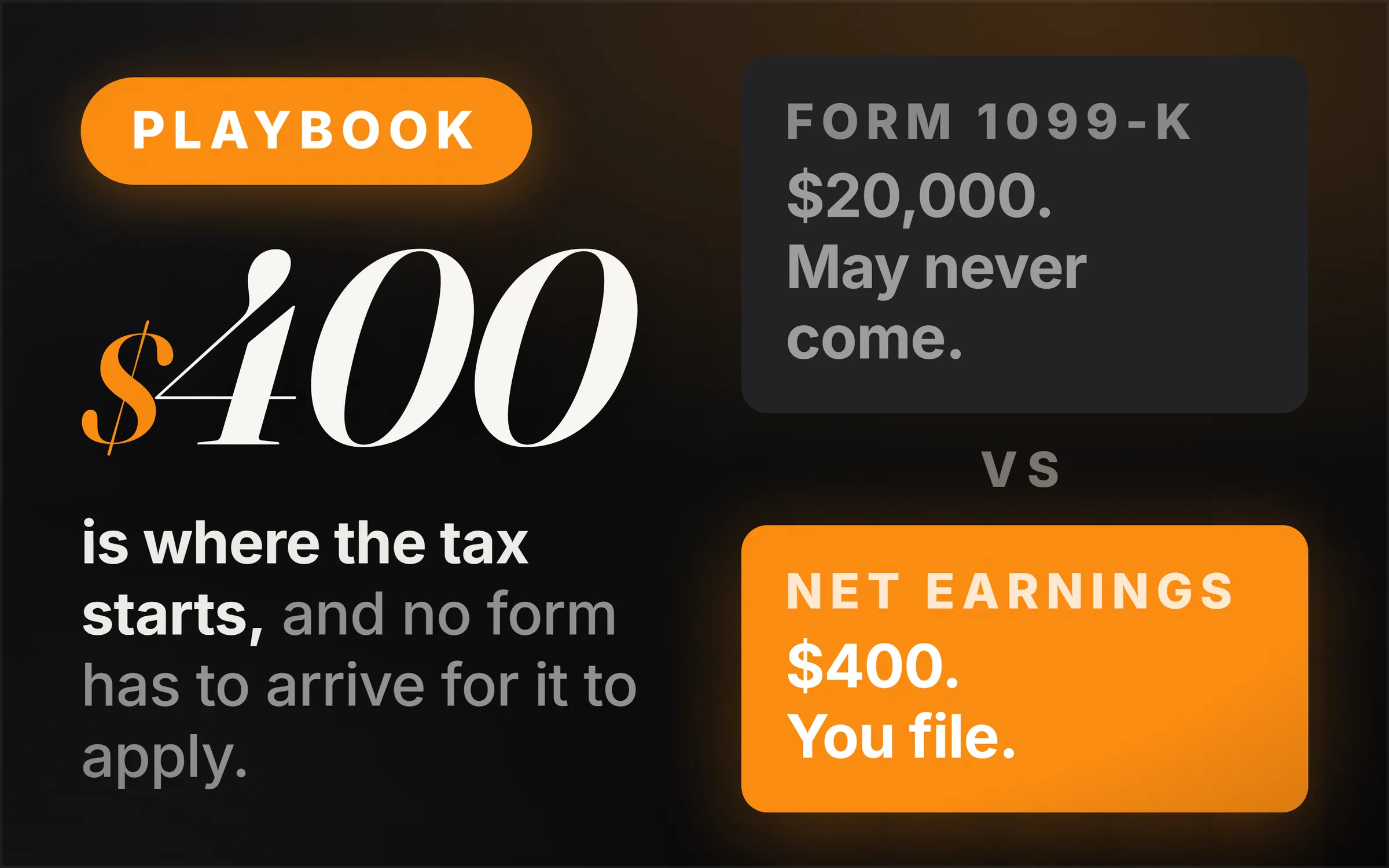
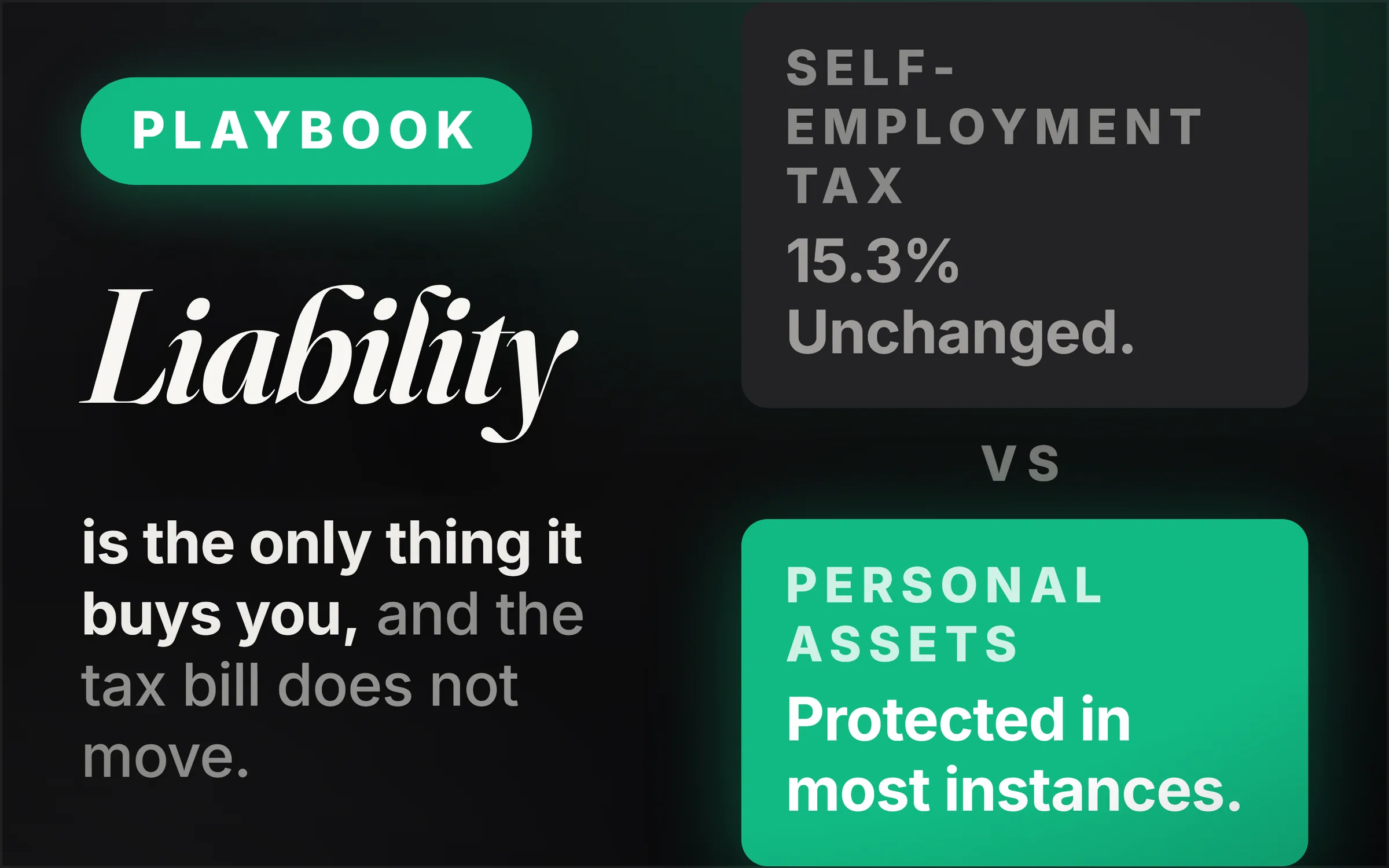
Self-employment tax is 15.3 percent of net earnings, made of 12.4 percent Social Security and 2.9 percent Medicare, and it applies once net earnings reach $400. Nothing withholds it. It arrives as a bill after the money has already been in your account and, in many cases, spent. Estimated payments become required when you expect to owe $1,000 or more for the year. We set the whole thing out in side hustle tax explained.
Unpaid time is the bigger one and it is invisible by construction. Travel between jobs, quoting work you do not win, sourcing materials, chasing invoices, and the administration of running anything at all are all real costs paid in the only input you cannot buy more of. In the route trades this is the dominant cost in the business: a day producing five paid hours out of eight has an overhead that dwarfs a $106 software stack.
That is why we keep returning to route density, recurring contracts and minimum call-outs in these articles. They are not efficiency tips. They are the only levers that touch the largest cost line in the business.
What could we not price?
Stripe, and the reason is worth reporting because it is the kind of thing this genre normally papers over.
Stripe's pricing page geolocates. Every route we tried, including the explicit United States path and an English locale, returned the Japanese page with Japanese rates. We could not read Stripe's US card rate from Stripe, and we are not going to publish a Stripe figure taken from memory or from another article, because a payment rate repeated second-hand is exactly the kind of claim that gets stale and then gets copied. Square's rates are published, readable and equally checkable, so we used those.
We also could not verify equipment, vehicle and supply costs for any of the trades, because they vary by market and condition beyond the point where a single figure is honest. Those lines are left open in every cost article we have written rather than filled with a plausible-looking number.
That is the general rule worth taking away. A cost list that has a number for everything has invented some of them. The categories where real published prices exist, which are software, insurance and payment processing, are the ones worth checking carefully. The categories where they do not exist are the ones where you should be most suspicious of anyone who sounds certain.
The honest hard part
The hard part is that costs are the comfortable thing to research, and they are almost never what decides the outcome.
A $106 monthly stack against $2,201 of average monthly revenue is 4.8 percent. Halving it, which is impossible, would improve the business by less than the difference between a dense route and a scattered one, or between a recurring contract and a one-off job. Yet cost is where new operators spend their planning time, because it is knowable, bounded and produces a feeling of diligence without requiring anyone to be contacted.
The second hard part is that the cheap start is exactly what allows a business to be started badly. When entry costs a few hundred dollars, nothing forces the planning that a capital-intensive business demands, and the low barrier that made it accessible also removed every prompt to think it through. That is a substantial part of why the industry averages we keep quoting are as low as they are, which we set out across five industries in boring businesses: which ones actually make money.
So the useful conclusion is not to optimise the stack. It is to budget the honest version of it, at list, month to month, with processing and tax included, and then to stop thinking about cost and go and find a customer.
Two trades where these lines land very differently: junk removal, where the same stack is a fraction of revenue, and car rental, where the asset dominates everything else.